Sourcing Bulk Insulated Bags: A Buyer's Checklist
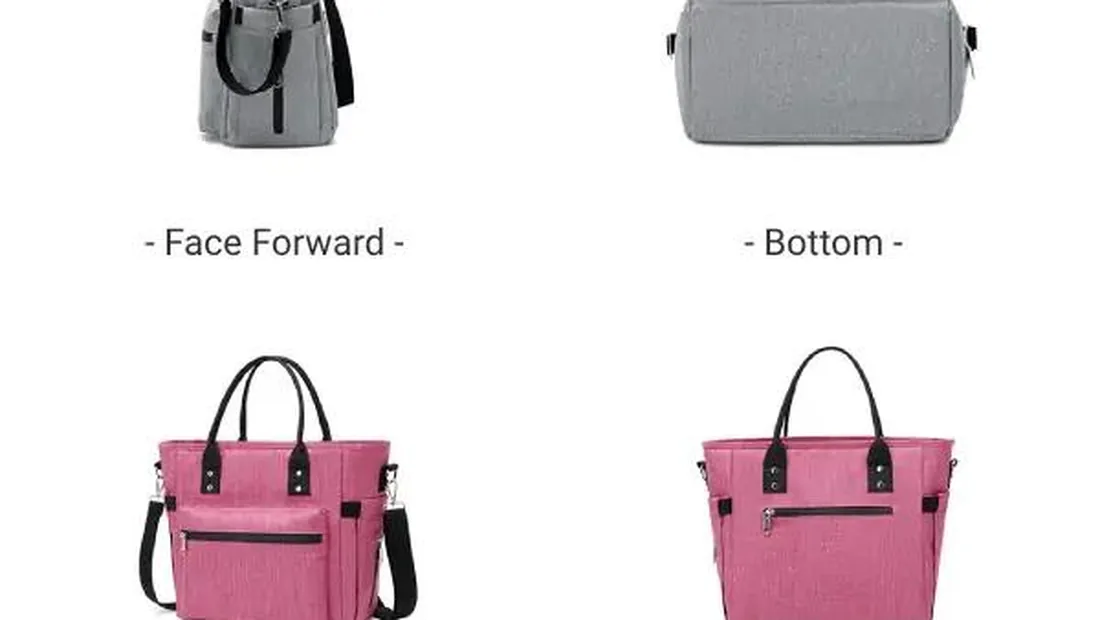
Bulk insulated bags are not one product with one spec. They are a family of soft-sided cold-chain containers built around a simple idea: slow the heat that moves into the bag. A buyer ordering 800 units in three sizes for a grocery delivery program has different requirements than a caterer buying 200 bags for hot food staging. The difference shows up in the insulation build, the closure, the liner, and the test report. This guide walks through the questions that separate a workable bulk order from an expensive mistake.
Sourcing bulk insulated bags starts with the load, not the bag. Define what goes inside, at what temperature, for how long, in what ambient conditions, and how often the bag gets opened. Then you can evaluate a supplier's construction claims. Camytonc builds cooler bags in Yiwu, China, and this checklist reflects the questions our own production team asks before quoting a bulk order. We have been making bags since 2013.
Define the requirement before you compare suppliers
Most bulk insulated bag projects fail at the requirement stage. The buyer knows the bag should keep food cold. That is not a spec. A spec needs five things.
Payload. What exactly goes inside? Meal containers, grocery totes, beverage cans, medical samples. Payload drives internal volume, divider needs, and liner choice. A bag for 12 meal trays needs different dimensions than a bag for loose produce.
Temperature window. What is the starting temperature of the contents, and what range must they stay within? A food delivery program may need two hours above 5°C. A medical courier may need a tighter band. The requirement is not "cold." It is a range with a start point and an end point.
Duty cycle. Is this a single-use promotional item or a daily workhorse? A bag that goes out three times a day for a year needs different seam construction than one handed out at an event.
Opening frequency. Every zipper opening exchanges air. A delivery driver opens the bag at each stop. A grocery pickup bag may stay closed until the customer unpacks it. Opening frequency changes the thermal math more than most buyers expect.
Wash regime. Food service bags get wiped, hosed, or sent through commercial cleaning. The liner and seam design must survive that. A bag that cannot be cleaned will not last one season in a commercial kitchen.
Insulation build: what to ask a supplier
Insulation is a layer stack, not a single material. The outer shell handles abrasion and printability. The insulation core slows conductive and convective heat transfer. The reflective barrier, when positioned correctly, reduces radiant heat transfer. The inner liner provides cleanability and moisture resistance. The closure controls air exchange.
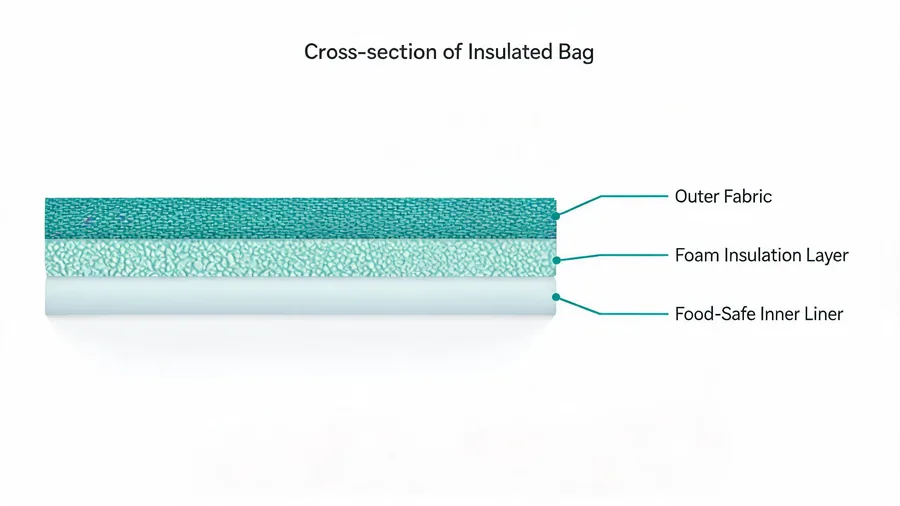
Ask the supplier to name each layer and its thickness. A common cooler bag build uses closed-cell polyethylene foam, sometimes with a metallized film facing. The foam thickness matters, but so does continuity. Compression at corners, seams, and strap anchors creates thermal bridges. Heat finds those bridges.
Ask about the liner. Aluminum PET liners are common in food delivery bags. They reflect radiant heat and make the interior easier to wipe. But a reflective liner without adequate foam behind it is a marketing feature, not a thermal system.
Ask about the closure. Zippers, roll-top closures, and overlapping flaps have different sealing performance. A zipper that leaks air at the teeth will undo the work of a good insulation wall. The closure is where real-use temperature loss concentrates.
Thermal claims without test conditions are not claims
Here is the bluntest advice in this guide. A supplier who tells you a bag "keeps food cold for 6 hours" without stating the test conditions is not giving you a spec. They are giving you a slogan.
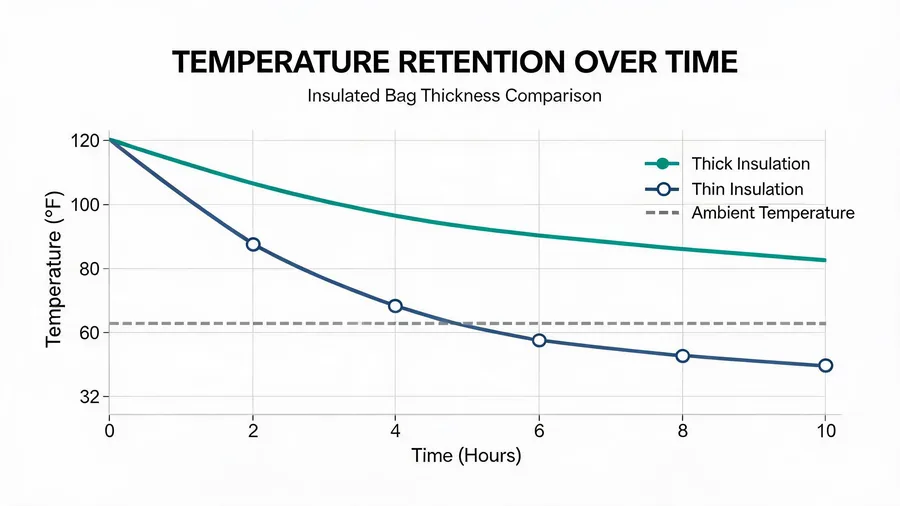
A real thermal claim states the ambient temperature, the starting temperature of the contents, the payload, the refrigerant quantity, the bag size, and the acceptance limit. It also names the test method. The industry reference we work from says this plainly: temperature claims must state the test method, ambient condition, starting temperature, load, refrigerant quantity, and acceptance limit.
Hold time means nothing without those conditions. The period during which contents remain within a defined temperature range depends on how full the bag is, whether the contents were pre-chilled, and how many times the zipper opened. A smaller air volume and a fuller load generally reduce rapid internal temperature fluctuation. Pre-chilled contents and correctly conditioned refrigerant packs improve cold-hold duration.
So ask for the thermal test report. If the supplier cannot produce one, treat the hold time as unverified. You can still buy the bag. You just cannot rely on the number.
Sampling and pre-production approval
Bulk orders need a sample trail. Do not skip it because the lead time is tight.
First comes the proto sample. This evaluates concept, shape, construction, and initial dimensions. It is not made with bulk materials. It answers the question: does this design make sense?
Then comes the pre-production sample. This one uses intended bulk materials and approved methods. It is the sample you test. Run the thermal test on this sample, not on a hand-made prototype. The pre-production sample is also where you approve color, logo placement, and workmanship against a golden sample.
Our sampling runs 1 to 10 days depending on the build. A revision round takes 2 to 3 days. Paid samples, not free ones. The sample cost protects both sides.
For MOQ, cooler bags start at 500 pieces. That is the documented baseline for a standard build. Special materials push the number up. Pantone-matched single-color orders can start at 200 pieces. Bulk production for cooler bags runs 7 to 15 days for full custom work. Stock bags with a logo ship in 3 to 7 days.
Inspection points at production
You cannot inspect every bag in a 5,000-piece order by hand. You inspect the process and the sample plan.
Dimensional inspection comes first. Finished dimensions are compared with the approved measurement method and tolerance table. A cooler bag that is 2 cm shorter than spec changes the payload capacity.
Seam strength matters more on cooler bags than on fashion bags. The bag carries cold, wet, heavy contents. Seams take load at the handles, the strap anchors, and the base. A controlled pull on the handle or webbing attachment verifies reinforcement performance.
Zipper cycling catches the failure buyers complain about most. A zipper that works on day one and fails on day forty is a warranty problem. The test opens and closes the zipper repeatedly to evaluate operating force and durability.
Water resistance testing checks the liner and seam construction. Use water-resistant only when the material or product has passed a defined water-resistance method. Use waterproof only when the complete construction, including seams and closures, meets the stated waterproof test conditions. Most cooler bags are water-resistant, not waterproof. Know the difference.
Visual workmanship inspection catches skipped stitches, loose threads, stains, asymmetry, puckering, and incorrect component placement. This is the last line before packing.
| Inspection point | What it catches | Why it matters for bulk insulated bags |
|---|---|---|
| Dimensional check | Size drift from spec | Payload capacity and stacking fit |
| Seam strength | Weak stitching at load points | Handle and strap failures in daily use |
| Zipper cycling | Early zipper wear or jamming | Opening frequency is the main thermal leak |
| Water resistance | Liner or seam leakage | Condensation and cleaning survival |
| Thermal test | Unverified hold time claims | The core function of the product |
| Visual workmanship | Skipped stitches, stains, asymmetry | Brand presentation and defect rate |
Packing for freight
Bulk insulated bags are bulky. Foam takes space. Packing decisions change your freight cost more than your unit price.
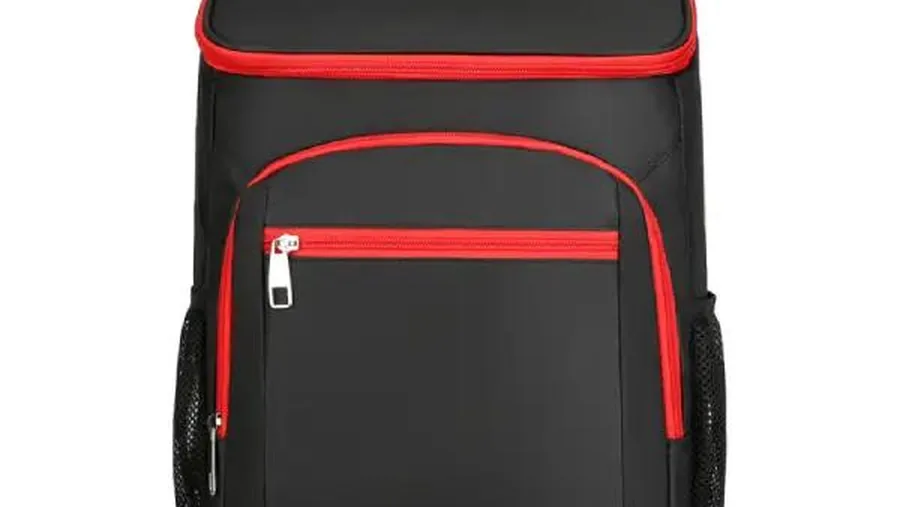
Flat packing saves volume but leaves creases. Folded packing compresses the foam and can create permanent thermal bridges at the fold lines. Ask the supplier how the bags will be packed and whether the fold pattern affects insulation recovery.
Carton size and weight matter for ocean freight. A carton that exceeds dimensional weight limits costs more than the bag inside it. Ask for carton dimensions and gross weight before you approve the order.
Sea freight runs 40 to 45 days from our dock. Air freight and courier options exist for smaller urgent orders. DHL, FedEx, UPS, and TNT door-to-door service takes 5 to 7 working days for small batches.
RFQ question list
Send this list to any supplier. If they answer all of it, you are talking to a factory. If they dodge, keep looking.
- What is the full layer stack, including foam type, foam thickness, reflective layer position, and liner material?
- What is the closure system, and what sealing performance has it demonstrated?
- Do you have a thermal test report? What method, ambient temperature, payload, refrigerant quantity, and pass criterion did it use?
- What is the MOQ for this build, and does it change with color count or material?
- What is the sampling process, sample cost, and revision timeline?
- What is the bulk production lead time after pre-production approval?
- Which inspection points do you run in-line, and which require third-party sign-off?
- How will the bags be packed for freight, and what are the carton dimensions and gross weight?
- What is your defect and replacement policy for bulk orders?
- Can you provide the BSCI, ISO 9001, SGS, TUV, or GRS documentation relevant to this order?
One more thing. The cheapest quote usually hides the thinnest foam. In bulk insulated bags, you cannot see the difference until the food arrives warm. Buy the spec, not the price.
For more on specific cooler bag types, see our food delivery cooler bags and insulated cooler backpacks. For medical and promotional applications, check medical cooler bags and promotional cooler bags.
FAQ
What is the MOQ for bulk insulated bags?
Our standard cooler bag MOQ is 500 pieces. Pantone-matched single-color orders can start at 200 pieces. Special materials or complex builds may push the number higher. Contact us with your spec for an exact quote.
How long does bulk production take?
Full custom cooler bag production runs 7 to 15 days after pre-production approval. Stock bags with a logo ship in 3 to 7 days. Sea freight adds 40 to 45 days. Air courier for small batches takes 5 to 7 working days.
Can you provide a thermal test report?
Yes. We test against a defined method with stated ambient temperature, starting temperature, payload, refrigerant quantity, and pass criterion. The report is linked to the exact material lot and product revision. Ask for it before you approve the pre-production sample.
What is the difference between water-resistant and waterproof cooler bags?
Water-resistant means the material passed a defined water-resistance method. Waterproof means the complete construction, including seams and closures, passed the stated waterproof test conditions. Most cooler bags are water-resistant, not waterproof. Confirm which claim applies to your build.