Small Cooler Bag for Medication
A small cooler bag for medication is a cold-chain component, not a lunch bag. We build medical carry bags to your specification and state thermal performance the way cold-chain professionals expect: tied to test method, ambient condition, starting temperature, load and refrigerant quantity.
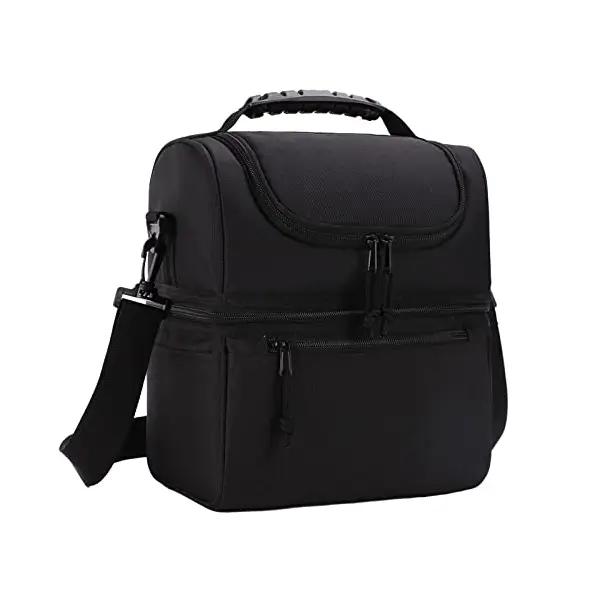
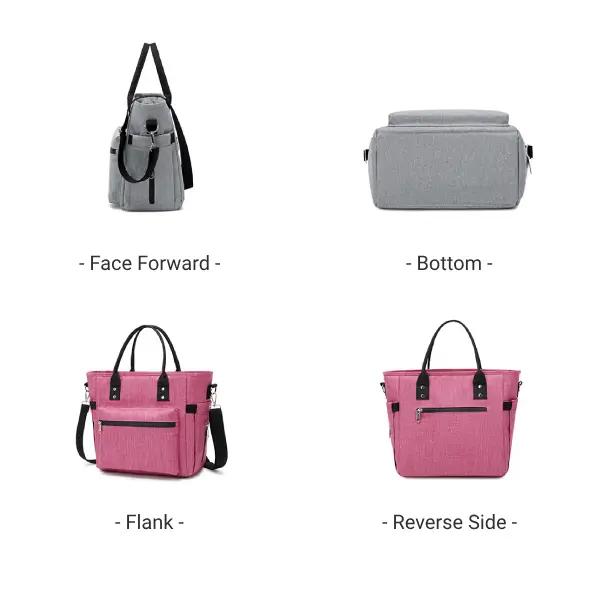
Cold-chain language we build to
When your team writes a spec with these terms, we can quote against it directly.
Hold time
The period contents remain within a defined temperature range under stated test conditions. We never quote hold time without the conditions attached.
Temperature excursion
Any period when measured temperature moves outside the approved range. Liner, closure and refrigerant choices all shape excursion risk.
Conditioning
Bringing the bag, contents and refrigerant packs to specified starting temperatures before testing or use. Pre-chilled contents extend real-world hold.
Thermal profile
A time-based record of temperatures during a test or shipment. We recommend validating your final configuration with a third-party lab against your own profile.
Note: we manufacture to your specification. Regulatory compliance of the filled product remains with the party placing it on the market, and we do not claim medical-device certifications.
Materials and construction for a small cooler bag for medication
A small cooler bag for medication is not a lunch box with a medical label printed on it. The difference is in how the wall is built and how the closure behaves. Say a buyer needs a bag that keeps insulin between 2°C and 8°C during a six-hour car journey in summer. The outer fabric matters less than the insulation core and the way the liner is sealed. Get those wrong and the bag fails before the first refill.
The functional stack in this category follows the same logic as any cold-chain soft packaging. An outer shell handles abrasion and print. A closed-cell foam core slows conductive and convective heat transfer. A reflective barrier, usually a metallized film, can cut radiant heat when it faces the right direction. The inner liner must be cleanable and, in many medication applications, capable of holding a small spill without soaking through. Then comes the closure. A zipper that gaps at the ends will leak cold air faster than a thinner foam wall ever would.
Buyers comparing suppliers often fixate on foam thickness. That is only one variable. Thermal bridges appear wherever insulation is compressed, interrupted, or replaced by a stiff zipper chain or a hard plastic handle anchor. A bag with 12 mm foam and a poorly designed zipper seam can underperform a bag with 8 mm foam and a continuous insulation wrap. Opening frequency matters more in real use than most spec sheets admit.
| Material choice | What it is good for | Where it fails |
|---|---|---|
| Closed-cell PE foam, 8, 15 mm | Lightweight insulation, low water absorption, consistent thickness, easy to die-cut | Compresses at fold lines and under load; loses performance where stitched through |
| Polyurethane foam | Softer hand feel, can be laminated directly to liner fabrics | Open-cell versions hold moisture; density varies more between lots |
| Metallized PET film as reflective barrier | Reduces radiant heat gain when positioned between foam and liner; adds little weight | Crinkles and cracks after repeated folding; must be continuous to work |
| TPU-laminated nylon or polyester liner | Wipe-clean surface, weldable seams, resists liquid penetration | Costs more than PU coating; stiffer at low temperatures |
| PU-coated polyester liner | Lower cost, wide color range, easy to sew | Coating adhesion can fail at seam holes; less chemical resistance than TPU |
| Water-resistant zipper with coated tape | Slows air exchange at the opening; improves temperature stability | Not waterproof under pressure; zipper cycling can wear the coating |
Condensation control deserves more attention than most buyers give it. A cold-loaded bag in a humid climate will collect moisture inside. If the liner is sewn with standard thread and no seam sealing, that moisture migrates into the foam. The insulation degrades, the bag smells, and the customer blames the factory. A welded TPU liner or a sealed seam spec changes the outcome. The approved specification should state which seam method applies and where.
Specifying by buyer situation
Three buyers can ask for the same product and need three different bags. The specification decisions that matter are not cosmetic.
The pharmacy doing local delivery
A pharmacy delivering refrigerated medication within a city has a short, predictable route. The bag is opened at the patient's door, maybe twice per trip. The critical variables are internal volume, the number of separate compartments for different temperature classes, and how quickly the bag can be wiped down between deliveries. A buyer in this situation should specify a smaller air volume relative to the payload, because a fuller bag fluctuates less. They should also ask for a liner that tolerates alcohol-based disinfectant wipes. Some PU coatings cloud or soften with repeated alcohol exposure. That is a test worth requesting before approval.
The specialty pharmacy shipping overnight
This buyer packs a box, not a hand-carried bag. The cooler bag sits inside a corrugated carton and may travel by air. The specification shifts toward crush resistance, closure security, and thermal performance under uncontrolled handling. A roll-top closure or an overlapping flap with a wide hook-and-loop strip reduces air exchange better than a standard zipper. The buyer should specify the exact refrigerant pack quantity and conditioning procedure, because hold time without those stated conditions is meaningless. The cooler bag thermal test from the reference requires ambient temperature, starting temperature, payload, refrigerant quantity, bag size, and pass criterion all in one statement. A buyer who receives a quote saying "holds 12 hours" without those details should ask for the test report.
The clinical trial logistics coordinator
This buyer manages temperature-sensitive investigational product across multiple sites. They need documentation, not just a bag. Every lot must trace to a material revision and a test report. The specification should include a thermal profile requirement, meaning a time-based temperature log during a qualified shipment simulation. The buyer should also require a temperature excursion definition and an acceptance limit. If the bag is reused, zipper cycling and liner cleanability become more important than initial insulation value. A bag that passes one cold test but fails after 200 zipper cycles is a compliance risk.
Across all three situations, pre-chilled contents and correctly conditioned refrigerant packs improve cold-hold duration more than adding another millimeter of foam. The bag is one component in a system. Buyers who treat it as a system get better quotes and fewer field failures.
Customization that changes tooling, cost or lead time
Not all customization is equal. Some choices only affect the print file. Others change the cutting die, the sewing line setup, or the material purchase order.
Customization that does not change tooling includes printed logo placement on flat panels, color selection from existing fabric ranges, zipper pull shape from a standard catalog, and hang tag or poly bag packaging choices. These are handled at the artwork and packing stage. They may add a day or two to pre-production but do not require new molds or dies.
Customization that does change tooling includes a new bag silhouette, a custom zipper length with a specific coil type, a molded base or rigid insert, a custom buckle or strap adjuster, and any welded seam pattern that requires a new high-frequency welding die. A custom shape means a new cutting die for the fabric panels. A welded liner with a specific compartment layout means a new welding tool. These tools take time to make and test. The first article sample will not be ready in the same window as a stock bag with a printed logo.
Material changes sit in between. Switching from PU-coated polyester to TPU laminate changes the cost per meter and may change the minimum order quantity from the fabric mill. It also changes the seam method. A factory that sews PU liners may not have the high-frequency welding equipment for TPU. Buyers should ask whether the quoted factory welds in-house or subcontracts. Subcontracting adds lead time and reduces control.
The honest way to compare quotes is to separate the line items. Ask for the tooling cost, the per-unit material delta, and the sample lead time as separate numbers. A supplier who bundles everything into one unit price is hiding where the risk sits.
What to check before approving production
Approval for a small cooler bag for medication should be based on more than a photo of the first sample. The reference lists the tests that matter. For this category, the cooler bag thermal test and the condensation test are the two that catch most failures.
The thermal test must state the ambient temperature, the starting temperature of the bag and contents, the payload, the refrigerant quantity, the bag size, and the pass criterion. A test that only reports "internal temperature after 8 hours" without the starting conditions is not a valid approval document. Ask for the thermal profile, the time-based record of measured temperatures. A single number hides excursions.
The condensation test checks for internal pooling, seam leakage, exterior moisture, and insulation damage after a cold-loaded cycle. This matters for medication because the bag often sits in a patient's home or a clinic. A bag that sweats onto a countertop creates a cleanup problem and a perception of poor quality.
Beyond thermal tests, check the zipper cycling result. The zipper is the most handled component. A coated zipper that passes a water-resistance test on day one can fail after 500 cycles. The reference method opens and closes the zipper repeatedly and evaluates operating force and durability. Request the cycle count and the pass criterion.
For the liner, the cosmetic bag leak test and cleanability test apply directly. A medication bag liner must hold a stated liquid volume for a stated duration without seepage or staining. It must also withstand the approved cleaning method. If the buyer's protocol uses alcohol wipes, the test should use alcohol wipes, not just water.
Claim control is the last gate. A material test result is not a finished-product claim. A TPU film with a 10,000 mm water resistance rating does not make the completed bag waterproof. The seams and closure must pass a defined method too. Use "water-resistant" only when the material or product has passed a defined water-resistance test. Use "leakproof" only when the complete product passes a defined liquid-containment test. If the supplier's quote says "waterproof medication bag" without a test report covering the seams, push back.
Finally, inspect the first article for thermal bridges. Look at the zipper ends, the handle anchors, and any place where the insulation is stitched through. Squeeze the wall along those lines. If it feels thin or hard, the insulation is compressed there. That is where the cold escapes. A buyer who checks these points before signing off will catch problems that a photo never shows. For a deeper look at material trade-offs, see our cooler bag materials guide or compare how different product categories handle the same thermal stack in our food delivery cooler bags page.
Frequently asked questions
Can you build a cooler bag to our pharma spec?
Yes. Send your payload size, target temperature range, duration and refrigerant plan, and we will propose a shell, foam and liner stack to sample against it.
Do you guarantee a specific hold time?
We state expected performance under defined conditions and recommend third-party validation of your final configuration. Blanket hold-time guarantees without stated conditions are not honest engineering, so we do not make them.
What sizes work for medication carry?
Compact formats like our CB-4021 (20.25cm*8cm*11cm base spec) suit personal medication carry, and every dimension is customizable at MOQ 500.
Get a quote for this line
Tell us your target size, quantity and decoration. We reply within 24 hours.