Insulated Delivery Bags for Food Delivery Fleets
Delivery bags fail at the seams, the zippers and the liner, which is exactly where we spec them harder. Our insulated bags for food delivery pair waterproof Oxford shells with 8-15 mm closed-cell foam and wipe-clean interiors that survive daily fleet duty.
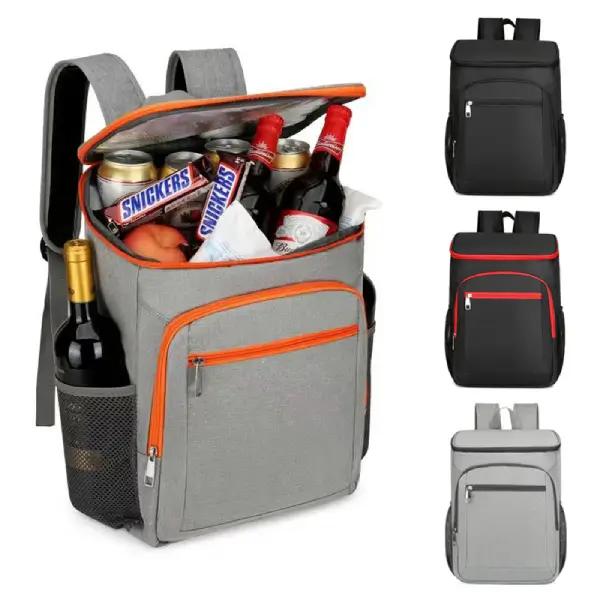
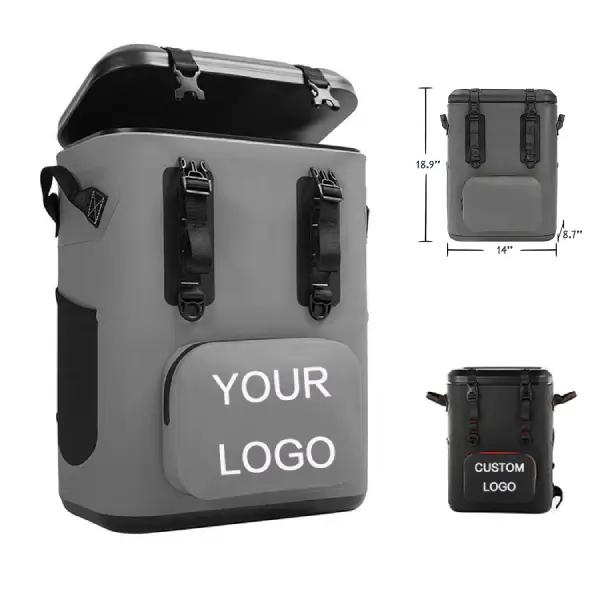
Built for the hundredth shift, not the first
Fleet buyers care about three things: how the bag holds temperature on a 40-minute route, how it wipes down at close, and how it looks with a courier logo on it. Our delivery builds answer all three.
- PU/PVC coated shells at 3000 mm+ or TPU lamination at 10,000 mm+ for wet weather
- Closed-cell foam resists compression at the base where hot boxes sit
- Aluminum PET liner reflects radiant heat on summer routes
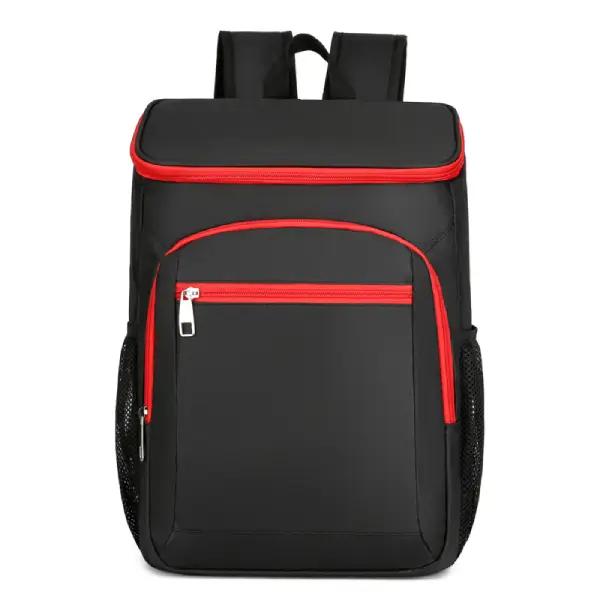
- Backpack and tote formats, with your fleet branding via 7 logo processes
Materials and Construction Options for Insulated Delivery Bags
Most insulated delivery bags look similar from the outside. The differences are inside the wall. A buyer who only compares photos will miss the choices that decide whether food arrives hot, cold, or somewhere in between. The functional stack matters more than the shell color.
The outer shell takes the abuse. It faces rain, doorframes, car trunks, and repeated wiping. Polyester with a PU or PVC coating is common because it cleans easily and prints well. Nylon costs more but resists punctures better when a driver shoves a bag against a sharp corner. The shell alone does almost nothing for temperature. Say a buyer picks a thick 600D polyester shell and assumes the bag will hold heat. It won't. Not without the middle layer doing its job.
The insulation layer does the real work. Closed-cell polyethylene foam is the workhorse here. It is light, cheap, and resists moisture. Polyurethane foam can insulate better per millimeter but absorbs water if the liner fails. For delivery bags that get wiped down daily, closed-cell PE usually wins. The reflective barrier, often a metallized film, only helps when it faces an air gap. Press it flat against the foam and the benefit shrinks. Construction quality decides whether that layer actually reduces radiant heat transfer.
The inner liner must survive grease, sauce, condensation, and aggressive cleaning. TPU lamination handles this better than a plain PEVA sheet. A heat-welded seam beats a stitched seam every time for liquid containment. Stitched seams leak unless taped. Taped seams add cost. For food delivery, the liner is not a nice-to-have. It is the difference between a bag that lasts six months and one that gets thrown out after three.
| Material choice | What it is good for | Where it fails |
|---|---|---|
| Polyester 600D with PU coating | Everyday delivery shells; good print surface; moderate cost | Coating wears off after heavy abrasion; not puncture-proof |
| Nylon 420D or 600D | High-abuse routes; better tear resistance; softer hand feel | Higher cost; absorbs moisture if uncoated |
| Closed-cell PE foam 8, 15 mm | Reliable insulation at low cost; moisture-resistant | Compresses over time; loses R-value if crushed at seams |
| Polyurethane foam | Higher R-value per millimeter; good for compact designs | Absorbs water; degrades if liner leaks; higher cost |
| TPU-laminated liner | Grease resistance; easy cleaning; heat-weldable seams | Higher material cost than PEVA sheet |
| PEVA liner | Low cost; adequate for dry or lightly damp contents | Cracks in cold weather; poor grease resistance |
Closure systems deserve more attention than they get. A zipper that gaps at the end lets warm air escape constantly. Roll-top closures seal better but slow down a driver making forty stops. Overlapping flaps work for large catering bags but add bulk. The right choice depends on how the bag gets used, not on what looks modern in a catalog.
One more thing. Thermal bridges. Wherever the insulation is compressed, interrupted, or replaced by a hard plastic foot or metal hinge, heat moves through faster. A buyer who specs a rigid bottom board should ask how it attaches. If screws pierce the insulation, that is a bridge. If it sits in a welded pocket, that is better. Small details like this separate suppliers who understand thermal performance from those who just sew fabric together.
Read more about how material choices affect real-world performance in our guide to cooler bag materials.
How Buyers in Different Situations Should Specify This Product
A restaurant chain with forty delivery drivers needs something different from a ghost kitchen testing one neighborhood. And a catering company moving hotel pans needs something else again. The specification that works for one will waste money for another.
Say you run a multi-location restaurant group. Your drivers handle the bags roughly. They drop them on pavement. They stack them in trunks. They wipe them down between shifts. For you, the liner and seam construction matter more than the insulation thickness. Specify TPU lamination with heat-welded seams. Ask for a drop test report. Ask how the supplier reinforces the bottom corners. You will buy hundreds of units. A bag that fails at the seam after eight weeks creates a replacement nightmare. The MOQ for this category is low enough that you can start with a pilot order, but don't skip the abuse testing.
Now consider a single-location restaurant doing its own delivery. You might send out twenty orders a night. Your bags live in the kitchen, not in a fleet van. You care about easy cleaning and stackability. Here, a simpler PEVA liner might be fine. But you still need the reflective barrier positioned correctly. Ask the supplier to show a cross-section sample. If the metallized film is glued flat against the foam, it is decoration, not function. A buyer who skips this check pays for a feature that does nothing.
A catering company has different constraints. The food is bulky. Hotel pans are heavy. The bag must hold temperature for hours, not minutes. In this case, insulation thickness and closure design dominate. A thicker foam wall, maybe 15 mm, makes sense. A roll-top or overlapping flap closure reduces air exchange better than a zipper. But the bag gets heavy. Specify a shoulder strap with reinforced anchors. Ask about static load testing. The bag will be lifted full, repeatedly. Seam strength at the strap anchors is where cheap bags fail first.
There is also the buyer who needs branded bags for a promotional campaign. Maybe a meal-kit company sends out insulated delivery bags with a logo. Here, print quality and lead time matter more than thermal performance. The bag only needs to survive one or two uses. A thinner foam, a simple PEVA liner, and a big printed logo on the shell. But do not confuse this with a fleet bag. Promotional bags are disposable. Fleet bags are tools. Specifying a promotional bag for daily delivery use will cost more in replacements than the initial savings.
For a deeper look at how long food actually holds temperature, see our post on how long ice lasts in a cooler.
Customization That Changes Tooling, Cost or Lead Time
Not all customization is equal. Some changes cost nothing and add no days. Others require new tooling, new patterns, or new testing. A buyer who understands this can negotiate better and avoid surprises.
Logo printing on the shell is the easiest change. Screen printing, heat transfer, or embroidery on an existing panel adds minimal cost and no new tooling. The artwork file is the only requirement. Lead time stays the same. Say you want a woven label instead. That is still simple. The label supplier needs a few days to produce, but the bag construction does not change.
Changing the liner material is different. If you switch from PEVA to TPU, the supplier may need to adjust the welding settings. The seam temperature, pressure, and dwell time all change. This is not new tooling, but it is a process change. Expect a sample round. Expect the lead time to grow by a few days. The cost goes up because the material costs more, not because of tooling.
Now consider changing the bag dimensions. A buyer who wants a bag that is 10 cm taller to fit a specific container. That requires a new pattern. The cutting dies change. The foam panels get cut to new sizes. This is real tooling. The cost is not huge for a simple rectangular bag, but it is not free. Lead time extends by at least a week, often more. And the new size must be tested. The drop test, the dimensional inspection, the thermal test if performance claims are involved. All of that takes time.
Adding a rigid bottom board is another tooling change. The board itself is cheap. The die to cut it is not. And the attachment method matters. If the board is glued in, that is simple. If it is screwed through the shell, you have just created thermal bridges and potential leak points. Specify a welded pocket instead. That changes the construction sequence. More labor. More time.
Hardware changes are somewhere in the middle. Swapping a zipper pull for a different style is easy. Changing the zipper size or type changes the sewing setup. Changing from a zipper closure to a roll-top changes the whole pattern. That is a new bag, not a customization.
The honest summary: printing and labels are cheap and fast. Material substitutions are medium cost and medium time. Dimension changes, new closures, and structural additions are real tooling changes. They cost money and they add lead time. A buyer who knows which bucket their request falls into can plan production schedules realistically.
If you are also considering bags for medical or pharmaceutical delivery, the specification logic changes. See our page on medical cooler bags for that category.
What to Check Before Approving Production
Approving a pre-production sample is not the same as approving a production run. The sample might be perfect. The run might not. Here is what to check before you sign off.
First, the seams. Turn the bag inside out. Look for skipped stitches, loose threads, and puckering. Run your finger along every seam. A seam that feels uneven will leak or fail under load. For food delivery bags, the liner seams are the critical ones. Ask the supplier to fill a sample bag with water and let it sit for an hour. If the outside is damp, the seams are not welded properly. This is a simple test. It catches most liner failures before they reach your drivers.
Second, the zipper. Open and close it twenty times. It should move smoothly without catching. Check the ends. A zipper that gaps at the closed end lets air escape. For a delivery bag, that gap is a thermal leak. Ask the supplier how they test zipper cycling. The reference method exists for a reason. A zipper that fails after a hundred cycles will fail your drivers after two weeks.
Third, the insulation. Cut open a sample if you can. Check that the foam is continuous. Look for gaps at the corners where panels meet. Check that the foam is not compressed where the handles attach. A handle sewn through the foam creates a thermal bridge. The bag will lose heat faster exactly where the driver holds it. Ask for a cross-section sample. A good supplier will provide one without hesitation.
Fourth, the claim language. If the supplier says the bag keeps food hot for four hours, ask for the test report. What was the starting temperature? What was the ambient temperature? How much food was inside? How many refrigerant packs? Without those numbers, the claim is meaningless. The industry reference is clear on this. Hold time must be stated with the test conditions. A buyer who accepts a bare number is buying marketing, not performance.
Fifth, the dimensional check. Measure the bag against the approved spec. A bag that is 2 cm shorter than specified might not fit the containers your drivers use. This sounds obvious. It gets missed constantly. Especially when the supplier rushes a sample. Check the interior dimensions, not just the exterior. The foam takes up space.
Finally, the visual inspection. Look at the print. Is the logo straight? Are the colors right? Check for stains, asymmetry, and sharp edges. A sharp edge on a zipper pull will cut a driver's hand. A loose thread on the inside will end up in someone's food. These are small things. They are the difference between a supplier who cares and one who does not.
For more on how cooler bags behave in different conditions, read our guide on how to keep food cold.
Frequently asked questions
Can you brand bags for our courier fleet?
Yes. Reflective prints (MOQ ~1000) and heat-transfer PVC (MOQ ~500) are the two processes fleet buyers pick most, and we match brand colors to ΔE≤2.0.
How do these bags handle daily cleaning?
Interiors use wipe-clean liners, and heat-welded seam construction is available so washdowns do not soak the foam.
What lead time should a fleet order plan for?
Full-custom production runs 7-15 days after sample sign-off. Express courier delivery adds 5-7 working days door to door; sea freight runs 40-45 days.
Get a quote for this line
Tell us your target size, quantity and decoration. We reply within 24 hours.