Promotional Cooler Bags
Promotional cooler bags work because people keep them. A logo on a bag that gets used every lunch break earns impressions for years, not days. We produce custom cooler bags with logo from our own factory, so decoration quality is controlled in-house.
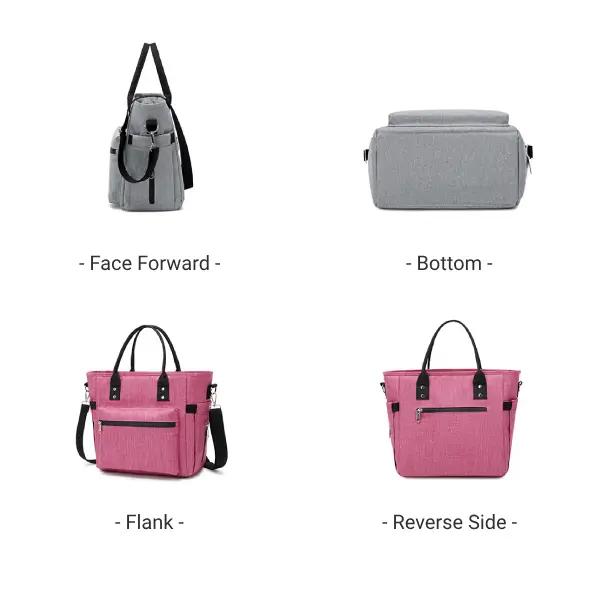
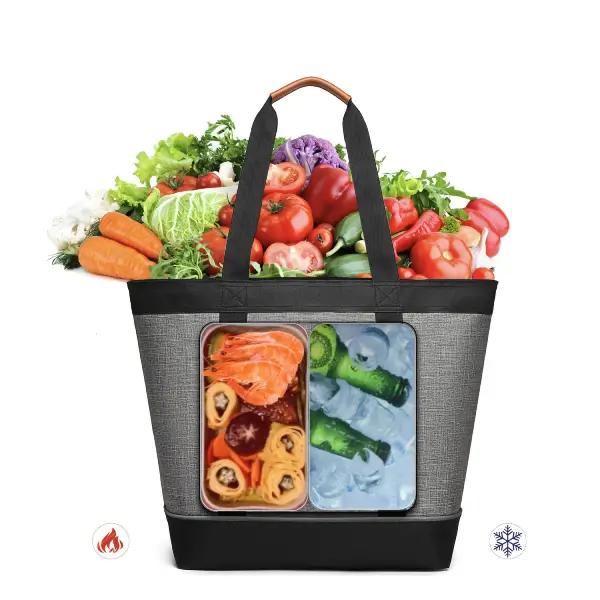
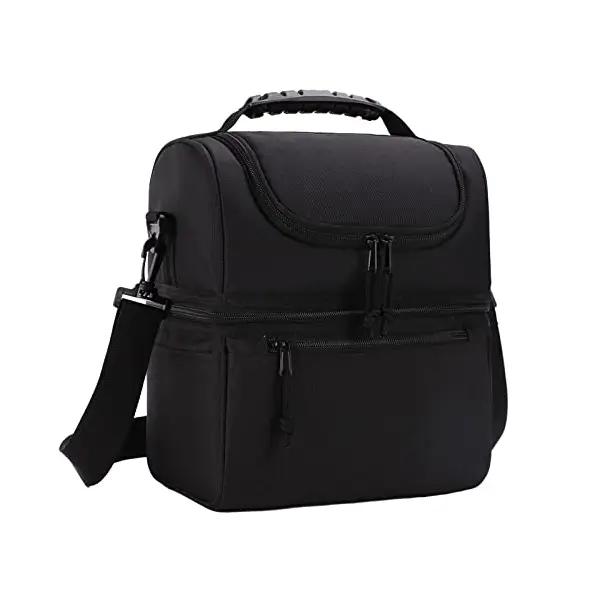
Seven logo processes, each with its own MOQ
Pick the decoration that fits your budget and finish. Pantone single-color matching starts at 200 pieces with a tolerance of ΔE≤2.0.
| Woven label | MOQ ~300 |
|---|---|
| Metal plate | MOQ ~200 |
| Heat-transfer PVC | MOQ ~500 |
| Laser etching | MOQ ~100 |
| Reflective print | MOQ ~1000 |
| Hidden logo | MOQ ~50 |
| Interchangeable system | MOQ ~1000 |
Packaging options: poly bag, color box, gift box with handle bag, branded poly mailer, hang tag with poly bag, or dust bag.
Materials and Construction Options for Promotional Cooler Bags
Promotional cooler bags look simple from the outside. A shell, a liner, some foam, a zipper. But the material stack decides how the bag behaves in a buyer's hands. It decides whether the logo stays flat. It decides whether condensation soaks through the bottom seam. And it decides whether the bag survives a summer of tailgates. You need to know what each layer does before you approve a spec.
Say a buyer orders 2,000 bags for a beverage brand. They want a bright print, a low unit cost, and a bag that holds ice for a few hours at a park. That buyer should not spec the same shell as a medical courier who needs a wipeable surface and a defined hold time. The material choices diverge fast.
The outer shell takes the abrasion, the printing, and the first contact with weather. The insulation slows conductive and convective heat transfer. A reflective barrier, when correctly positioned, can reduce radiant heat transfer. The inner liner handles moisture and cleaning. The closure controls air exchange. Each layer fails differently. The failure modes matter more than the marketing language.
Outer Shell Choices
Woven polyester is the workhorse for promotional cooler bags. It prints well, costs less, and holds a crease. A 600D polyester shell resists scuffs better than a 210T taffeta. But it weighs more and folds stiffer. Nylon shells feel softer and take dye evenly. They stretch more when wet, though. That stretch can distort a printed logo over time.
Canvas or cotton-blend shells feel premium and take embroidery beautifully. But their water resistance depends on the coating applied. A buyer who wants a canvas cooler bag for a corporate gift should ask about the coating weight and the seam treatment. They shouldn't assume the fabric repels water on its own.
A laminated TPU shell can be designed for waterproof performance. It costs more and changes the hand feel. It also limits print methods. Screen printing adheres differently to TPU than to woven polyester. Buyers who want a fully welded, submersible bag usually need to move away from standard promotional pricing.
Insulation and Liners
Closed-cell polyethylene foam is the most common insulation in promotional cooler bags. It resists moisture, keeps its shape, and costs little. Thicker foam adds thermal resistance but reduces interior volume. A bag with 15 mm foam walls holds less than the same external size with 8 mm foam. That trade-off shows up in the spec sheet as a capacity number.
Aluminum PET liners are popular for soft coolers. They're easy to wipe clean and can reduce radiant heat transfer when correctly positioned in the construction. A PEVA liner is common for lunch-style promotional bags. A thicker PVC liner handles ice and condensation better. But it adds weight and stiffness. The liner choice also affects how the bag folds. A stiff PVC liner makes a collapsible bag less collapsible.
Thermal bridges happen where insulation gets compressed or interrupted. A zipper sewn through the full wall thickness creates a bridge. A handle anchor that crushes the foam creates another. Buyers who compare suppliers should ask how the seams are constructed, not just what foam is inside. A bag with great foam and a bad seam design performs worse than a bag with average foam and careful construction.
| Material choice | Good for | Where it fails |
|---|---|---|
| 600D polyester shell | Bright prints, low cost, scuff resistance | Heavier, stiff when folded, no stretch |
| 210T polyester taffeta | Lightweight giveaways, simple logos | Lower tear strength, shows wrinkles, less durable |
| Nylon shell | Soft hand feel, even dyeing, packs small | Stretches when wet, logo distortion possible |
| Canvas or cotton blend | Premium look, embroidery, corporate gifts | Water resistance depends on coating, heavier |
| Laminated TPU shell | Wipeable, waterproof design potential | Higher cost, changes hand feel, limits print methods |
| Closed-cell PE foam | Moisture resistant, low cost, shape retention | Thicker foam reduces interior volume |
| Aluminum PET liner | Easy cleaning, radiant heat reduction when positioned correctly | Can crease or delaminate with heavy folding |
| PEVA liner | Lightweight, common for lunch bags, flexible | Lower puncture resistance than PVC |
| PVC liner | Handles ice and condensation, durable | Adds weight, stiffens the bag, higher cost |
How Different Buyers Should Specify Promotional Cooler Bags
There is no single correct spec for promotional cooler bags. The right choices depend on who receives the bag and what they do with it. Three buyer situations show how the decisions change.
Say a buyer works for a beer distributor. They want 5,000 bags for summer events. The bag holds a six-pack with ice for a few hours. They need a low unit cost and a big logo area. This buyer should spec a 600D polyester shell, 8 mm PE foam, and a PEVA liner. They should skip welded seams and skip the aluminum PET liner. The savings per unit matter more than a marginal gain in hold time. They should also ask for a zipper cycling test. Event attendees open and close these bags constantly.
Now say a buyer runs a meal kit company. They ship chilled ingredients in a branded cooler bag as part of a subscription box. The bag gets packed at a warehouse, rides in a truck, and sits on a doorstep. Condensation is a real problem. This buyer should spec a thicker liner, maybe PVC, and pay attention to seam sealing. They should ask about the condensation test method and the pass criterion. A bag that pools water inside the liner damages the food packaging and the brand experience. The spec should also include a defined hold time with a stated ambient temperature, starting temperature, payload, and refrigerant quantity. Without those numbers, a supplier's "keeps cold for 6 hours" claim means nothing.
Say a buyer works for a pharmaceutical company. They need promotional cooler bags for a conference, but the bags will carry temperature-sensitive samples. This buyer cannot treat the bag as a giveaway. They need a thermal profile test. They need to know the excursion limits. They need a liner that can be cleaned between uses. The spec should state the test method and the acceptance limit. This is a different product from a beer event bag, even if both look like soft coolers. A supplier who quotes the same construction for both situations has not understood the requirement.
The lesson is simple. Start with the use case, not the price. Write down what the bag must do. Then choose materials that support those functions. Buyers who spec from a template get template results.
Customization That Changes Tooling, Cost, or Lead Time
Not all customization is equal. Some changes cost nothing extra and ship in days. Others require new tooling, new testing, and weeks of lead time. Buyers should know which bucket their request falls into before they approve a quote.
Logo printing on an existing shell is the cheapest form of customization. Screen printing, heat transfer, and embroidery on a stock panel add little cost and little time. The logo file, the placement, and the color count matter. But the bag's construction does not change. A buyer who wants the same bag with a different logo can expect a short lead time.
Changing the shell color or the liner color usually means sourcing a new fabric lot. That can add days or weeks depending on the supplier's inventory. If the factory already stocks the color, the change is trivial. If they need to dye a new lot, the MOQ and lead time shift. Buyers should ask whether the color is on hand before assuming a quick turnaround.
Adding a new pocket, a different zipper, or a changed handle system is a bigger deal. It changes the cutting pattern, the sewing sequence, and often the inspection checklist. A new pocket means new panels. A new zipper means new hardware sourcing. These changes can add a week or more to sampling and require a new pre-production sample approval.
Changing the insulation thickness or the liner material changes the thermal performance. That triggers new testing if the buyer has performance claims. A thicker foam wall changes the bag's dimensions and capacity. A different liner changes the condensation behavior. These are not cosmetic changes. They're functional changes that should be re-validated.
Custom tooling, like a molded base or a custom zipper pull, is the most expensive category. It requires a new mold, a new production run for the hardware, and usually a higher MOQ. Buyers should budget weeks, not days, for custom tooling. They should also ask about the tooling cost and who owns the mold after production.
The honest advice is to separate the spec into two lists. List one has changes that do not affect construction. List two has changes that do. Approve list one quickly. Scrutinize list two carefully. A supplier who blurs the line between the two lists is not doing the buyer any favors.
What to Check Before Approving Production
Promotional cooler bags fail in predictable ways. Zippers break. Seams leak. Insulation compresses. Logos peel. A buyer who checks the right things before production avoids most of these failures. The checks come from the quality control and performance testing sections of the industry reference.
Start with the zipper. Zipper cycling tests open and close the zipper repeatedly to evaluate operating force and durability. A promotional cooler bag gets opened dozens of times per event. A zipper that fails after 200 cycles is a warranty problem. Ask the supplier how many cycles the zipper is tested to and what the pass criterion is.
Check the seams. Seam strength tests measure the force required to break the seam, material, or stitch system near a joint. A cooler bag with a weak bottom seam leaks condensation and ruins whatever sits under it. Ask for the seam strength test result and the sample size. A single test on a prototype does not prove the production run will match.
Look at the liner. A cooler bag condensation test evaluates internal pooling, seam leakage, exterior moisture, and insulation damage. This test matters more for bags that hold ice or chilled contents. A buyer who skips this check may discover that the bag sweats through the bottom after an hour in the sun.
Review the print. Colorfastness to rubbing evaluates color change and color transfer under dry and wet rubbing. A logo that bleeds onto a customer's clothes is a brand disaster. Ask about the colorfastness test and the rubbing method. A promotional bag with a smeared logo is worse than a bag with no logo.
If the buyer makes a thermal claim, the claim control rules apply. State the hold time together with the ambient temperature, starting temperature, payload, refrigerant quantity, bag size, and pass criterion. Do not convert a material test result into a finished-product claim without confirming the complete construction. A foam sample that insulates well in a lab does not prove the finished bag performs the same way. The seams, the zipper, and the liner all change the result.
Finally, check the dimensional inspection. Finished dimensions should be compared with the approved measurement method and tolerance table. A bag that measures 2 cm smaller than the spec holds fewer cans and disappoints the end user. Dimensional drift happens when patterns wear or cutting tolerances loosen. A quick check before production catches it early.
Buyers who compare suppliers for promotional cooler bags should ask for these test reports before approving a pre-production sample. A supplier who cannot provide them is guessing. A supplier who provides them with clear pass criteria and sample sizes is worth a second look. For more on how we handle this process, see our OEM process. If your use case involves food delivery, the requirements shift. Read about food delivery cooler bags to see how the spec changes. And if you are wondering whether these bags travel well, our guide on bringing a cooler on a plane covers the practical side.
Frequently asked questions
What is the minimum order for promotional cooler bags?
MOQ is 500 pieces for cooler bags. Some logo processes carry their own minimums, from about 50 pieces for hidden logos to about 1000 for reflective prints.
How fast can you deliver for an event date?
Ready-to-ship bestsellers with your logo ship in 3-7 days. Full-custom runs take 7-15 days in production, plus 5-7 working days by express courier or 40-45 days by sea.
Do you provide samples before the bulk order?
Yes, paid samples in 1-10 days depending on complexity, with one revision round in 2-3 days.
Get a quote for this line
Tell us your target size, quantity and decoration. We reply within 24 hours.