Cooler Backpack Manufacturer for Custom Insulated Coolers
Backpack coolers carry cold hands-free, which is why they lead our outdoor line. We also build the neighboring formats buyers ask for in the same program: cooler totes, soft-sided coolers, collapsible coolers, and camping or fishing variants, all to your specification.
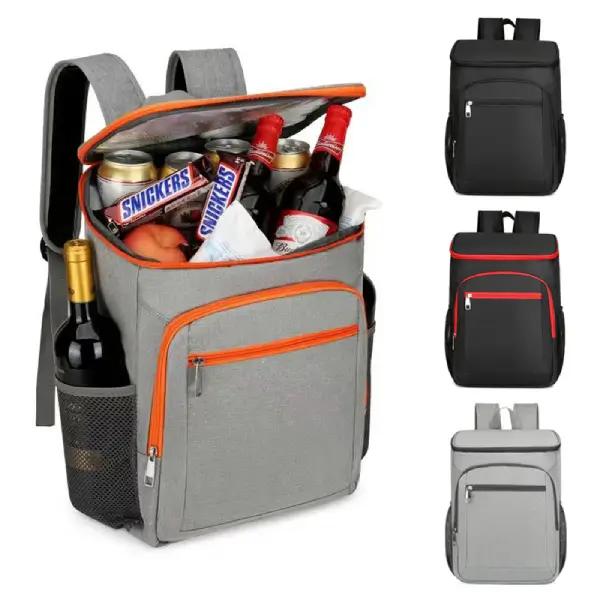
Waterproof Oxford insulated backpack, a hands-free thermal delivery format.
View specifications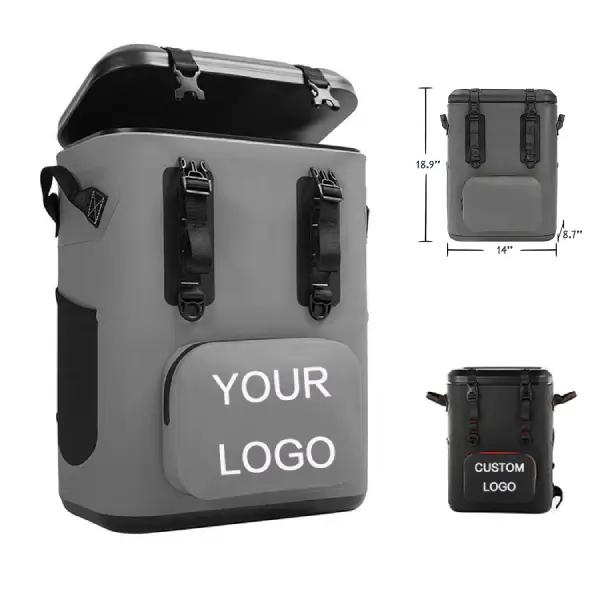
420D/PVC and TPU soft cooler backpack with magnetic leakproof closure.
View specifications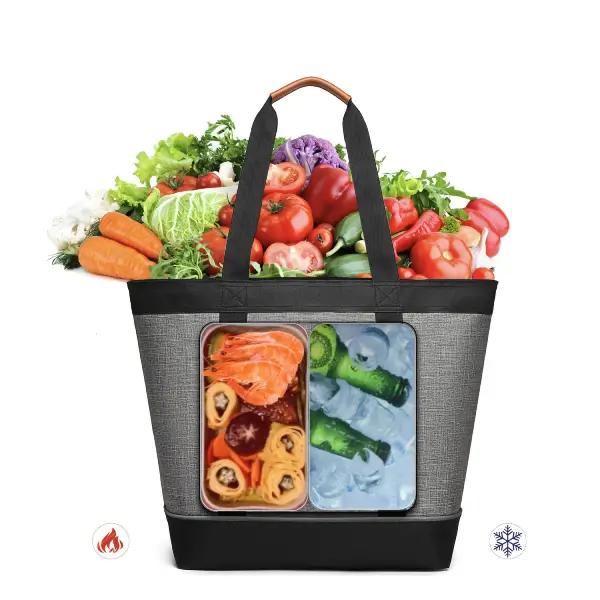
Waterproof Oxford tote lunch bag, insulated and built for logo customization.
View specifications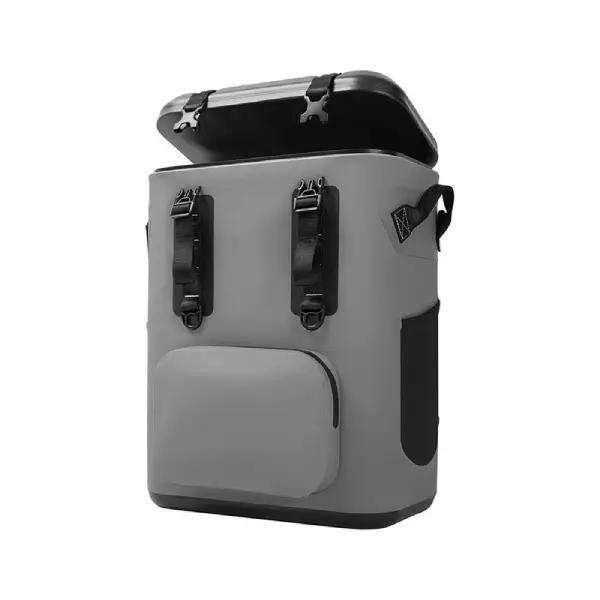
One line, six formats
Under this collection we quote insulated backpacks, cooler totes, soft-sided coolers, collapsible coolers, camping coolers and fishing coolers. The shell, foam and liner stack stays consistent; the pattern and hardware change per format.
Typical build: Oxford or 420D/PVC shells, closed-cell PE/XPE/EVA foam 8-15 mm, aluminum PET liner, waterproof zippers. Roll-top closures and heat-welded seams available for wet environments.
Materials and Construction Options for Insulated Cooler Backpacks
A cooler backpack is only as good as the layer stack between the outside world and the chilled payload. Buyers evaluating a cooler backpack manufacturer should start by asking what sits behind the shell fabric. The industry reference for this category describes a functional layer stack: outer shell, insulation, reflective barrier, inner liner, closure system, and refrigerant pack. Each layer can be specified independently, and each one changes cost, weight, and cold-hold performance.
The outer shell takes the abuse. It gets dragged through car trunks, dropped on gravel, and rubbed against door frames. Nylon and polyester dominate here. Nylon feels softer and resists puncture better at the same denier, but it costs more and absorbs moisture. Polyester holds color well, dries fast, and keeps its shape when wet. A buyer who sells into beach or pool markets may prefer polyester for that reason. A buyer who sells premium hunting gear may want the abrasion resistance of a heavier nylon.
Insulation is where thermal performance is won or lost. Closed-cell polyethylene foam is the workhorse. It does not absorb water, it is light, and it sews cleanly. Polyurethane foam insulates slightly better for a given thickness but can hold moisture if the liner fails. The reference warns that thermal bridges occur where insulation is compressed, interrupted, or replaced by conductive hardware. Every zipper, every strap anchor, every piping seam is a potential bridge. A good pattern engineer places seams away from the highest heat-load areas, or accepts a small bridge where a strap must anchor.
The reflective barrier matters only if it is positioned correctly. A foil-faced layer facing the interior can reduce radiant heat transfer, but it must not be crushed during sewing. The liner then carries the food-contact and leak-control burden. PEVA and food-grade PE liners are common. TPU laminates cost more but weld into truly leak-resistant seams. The closure system controls air exchange at the opening, and in real use that opening is often the biggest heat leak in the bag.
| Material choice | What it is good for | Where it fails |
|---|---|---|
| Polyester shell, 600D | UV resistance, colorfastness, lower cost, fast drying | Lower abrasion resistance than nylon at equal weight |
| Nylon shell, 420D to 840D | High abrasion and puncture resistance, soft hand feel | Higher cost, moisture absorption, color fade in strong sun |
| Closed-cell PE foam, 8 to 15 mm | Lightweight, water-resistant, stable insulation value | Bulkier than PU foam at the same R-value |
| Polyurethane foam | Slightly higher insulation per thickness | Can retain moisture if liner leaks, more expensive |
| PEVA liner | Food-safe, cleanable, low cost, welds adequately | Less puncture-resistant than TPU, can crack in extreme cold |
| TPU laminated liner | Weldable seams, high leak resistance, durable | Higher cost, heavier, requires heat-welding equipment |
| Foil-faced reflective barrier | Reduces radiant heat transfer when facing interior | Crushed by heavy stitching, adds stiffness, can delaminate |
Construction method changes the outcome as much as material choice. A sewn construction is cheaper and faster. A welded construction eliminates needle holes in the liner, which is where leaks start. Some buyers specify a hybrid: sewn shell and insulation, welded liner. That is often the best balance of cost and leak resistance for a personalized backpack cooler that will carry ice or condensation.
How Buyers in Different Situations Should Specify This Product
Say a buyer runs a corporate gifting program and needs five hundred custom cooler backpacks for a summer sales incentive. Their priority is not maximum ice retention. It is a clean logo area, a reasonable price, and a bag that survives one season of picnics. That buyer should specify a 600D polyester shell, 8 mm PE foam, a PEVA liner, and a simple zippered main compartment. They should not pay for a welded TPU liner or a foil barrier. The logo matters more than the thermal profile. A wholesale insulated cooler bags order like this should keep the bill of materials lean.
Now consider a buyer who supplies meal delivery services. Their drivers carry chilled meals for hours in a hot vehicle. Opening frequency is high. The bag must recover temperature quickly after each stop. This buyer needs a different specification. A thicker insulation layer, perhaps 12 to 15 mm closed-cell foam, matters. A reflective barrier positioned inside the insulation helps. The liner must be leak-resistant because condensation will pool. This buyer should also ask about the closure system. A roll-top or overlapping flap seals better than a standard zipper, but it slows down the driver. The trade-off is real and must be decided before sampling.
A third buyer builds a premium outdoor brand. Their customers expect a cooler backpack that survives multiday hikes and holds ice for a full day. This buyer will push the material stack. A rugged nylon shell, welded TPU liner, dense foam, and a foil barrier all make sense. They will also care about strap anchors and load carriage, because a loaded cooler backpack is heavy. The reference notes that strap-anchor strength is a product-level test. A premium buyer should request that test report. They will also want a thermal test with stated ambient temperature, starting temperature, payload, and refrigerant quantity. Without those stated conditions, a cold-hold claim means nothing.
Each of these buyers is a cooler backpack manufacturer's customer, but they are not buying the same product. The specification decisions that change the outcome are insulation thickness, liner material, closure type, and whether the seams are sewn or welded. Everything else is decoration.
Customization That Changes Tooling, Cost or Lead Time, Versus Customization That Does Not
Most buyers assume every change costs money. That is not true. Some changes are free at the sampling stage. Others trigger new tooling, longer lead times, and higher unit costs. Knowing which is which separates experienced buyers from first-timers.
Customization that does not change tooling includes logo placement and size, as long as the logo fits the existing panel. It includes color selection from the factory's standard fabric card. It includes adding a hang tag, changing the zipper puller color, or printing a care label. These changes ride on existing patterns and existing hardware. A custom cooler backpack with a new logo on a standard shell is still a standard shell. The factory can sample it in days, not weeks.
Customization that changes tooling is a different conversation. A new bag shape requires a new pattern. A new zipper length or a new pocket configuration changes the cutting dies. A custom-molded zipper puller or buckle requires a mold, and molds cost money and take time. A buyer who wants a fully welded TPU liner on a bag that was previously sewn is asking for a different production process. That changes the line setup and the labor cost. The reference is clear: a material test result does not become a finished-product claim without confirming the complete construction. The same logic applies to customization. A logo on a stock bag is not the same as a new bag with a logo.
Lead time moves when tooling moves. A standard bag with a new logo can often ship in the factory's normal production window. A bag with a new pattern, new mold, or new welding fixture adds days or weeks. Buyers should ask the factory to separate the sampling time for the custom element from the production time for the base bag. That way the schedule is honest. A personalized backpack cooler with a custom shape is a different project from a stock shape with a logo, even if both look similar in a product grid.
Cost moves in steps, not smoothly. The first step is the unit cost of the base bag. The second step is the cost of the custom material or component. The third step is the amortized tooling cost, spread over the order quantity. A buyer ordering 500 pieces will feel a mold cost much more than a buyer ordering 5,000 pieces. The factory should show these as separate line items. If a quote lumps everything into one number, ask for the breakdown.
What to Check Before Approving Production for This Category
Approving a cooler backpack for production is not a formality. It is the last chance to catch problems before they are multiplied across thousands of units. The industry reference lists the tests that matter for this category. A buyer should not approve production without seeing evidence that the right tests were run on the right sample.
For the shell and insulation, check abrasion resistance and seam strength. The shell will rub against car trunks and concrete. The seams will carry the weight of a full load plus ice. A seam that passes a visual inspection can still fail under load. The reference describes a seam strength test that measures the force required to break the seam, material, or stitch system near a joint. Ask for that report, not just a photo of the bag.
For the liner, check the leak test. A cosmetic bag leak test is not the same as a cooler bag condensation test. The cooler bag is cold-loaded, and condensation forms inside. The reference describes a condensation test that evaluates internal pooling, seam leakage, exterior moisture, and insulation damage. A liner that holds water at room temperature may weep at the seams when cold and wet for hours. This is exactly where a sewn liner fails and a welded liner passes. If the bag is marketed as leakproof, the complete product must pass a defined liquid-containment test. A material test result is not enough.
For the thermal claim, check the test method. A cooler backpack manufacturer should state the ambient temperature, starting temperature, payload, refrigerant quantity, bag size, and pass criterion. A claim like "keeps ice for 24 hours" without those conditions is not a claim. It is a guess. The reference is explicit: temperature claims must state the test method, ambient condition, starting temperature, load, refrigerant quantity, and acceptance limit. Buyers who plan to publish a cold-hold number on their own packaging should get this in writing from the factory before production.
For the hardware, check zipper cycling and buckle strength. A cooler backpack is opened and closed constantly. The zipper is the most likely point of failure. The reference describes a zipper cycling test that opens and closes the zipper repeatedly to evaluate operating force and durability. Buckle and adjuster strength matters on the shoulder straps and sternum strap. A broken buckle in the field is a return, and returns are expensive.
Finally, check the visual workmanship inspection. Loose threads, skipped stitches, stains, asymmetry, puckering, and sharp edges are all defects. They are also all preventable. The reference lists visual workmanship inspection as a product-level test. A buyer should receive a dimensional inspection report and a workmanship report for the pre-production sample. If the factory cannot produce these, the buyer should not approve production. The cost of a bad batch is always higher than the cost of a careful pre-production check. For more on how cooler bags perform in specific use cases, see our notes on how long ice lasts in a cooler and our guide to cooler bag materials.
Frequently asked questions
What is your MOQ for custom backpack coolers?
MOQ for cooler bags is 500 pieces. Pantone color matching on a single color starts at 200 pieces.
How long does production take?
Full-custom cooler bag production typically takes 7-15 days after sample confirmation. Rush options can cut lead time by 30-70% for a 20-40% fee.
Can you match our brand colors and logo?
Yes. We match Pantone colors to a tolerance of ΔE≤2.0 and support woven labels, metal plates, heat-transfer PVC, laser etching and reflective prints, each with its own MOQ.
Get a quote for this line
Tell us your target size, quantity and decoration. We reply within 24 hours.