Can You Put Ice in a Cooler Bag?

Can you put ice in a cooler bag? You can. The real question is whether the bag will hold the meltwater and keep its insulation working. Loose ice melts. That's not a defect. It's physics. A cooler bag built for loose ice has a waterproof liner, sealed seams, and some way to drain or contain the water. A bag without those will leak through the stitching and soak the insulation.
We make insulated bags at Camytonc, and buyers ask us this constantly. A restaurant owner ordering 600 food delivery bags wants to know if drivers can just dump ice in. A promotional buyer ordering 2,000 branded cooler totes wants to know if a customer can fill it at a hotel ice machine. The answer depends on the bag's construction, not the brand name.
What Happens When Loose Ice Sits Against the Liner
Loose ice is wet from the start. A thin film of water forms on the surface as soon as the ice touches a warmer liner. That water runs down the sides and pools at the bottom. If the liner has stitched seams, the water finds the needle holes. It wicks through the thread and into the insulation layer.
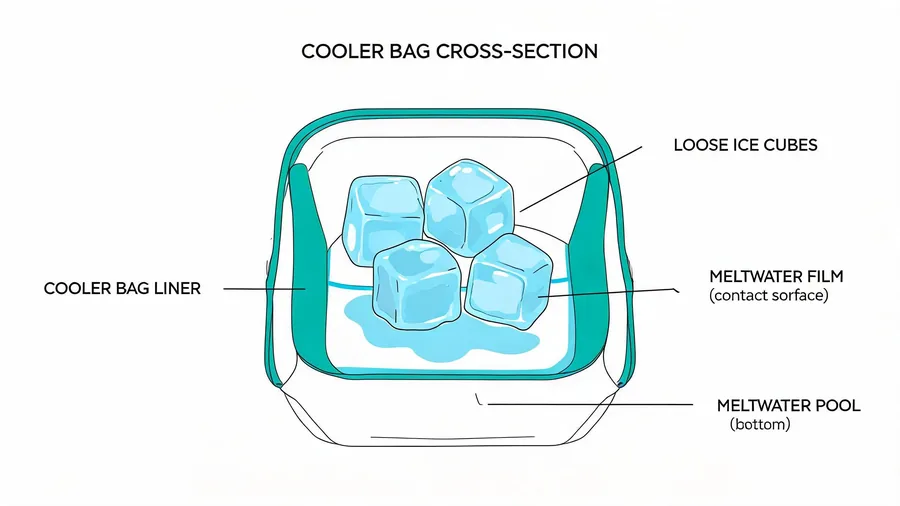
That's the failure point. Closed-cell foam insulation resists water better than open-cell foam, but the fabric layers around it can still hold moisture. A soaked insulation layer loses thermal performance. It also gets heavy and can develop mildew. The bag still looks fine from the outside. Inside, it's degrading.
Imagine a delivery driver filling a stitched-liner bag with loose ice at 7 a.m. By noon, the bag has leaked onto the car seat. The insulation is damp. The ice is gone. The driver blames the bag. The buyer blames the supplier. The real issue is that the bag was never specified for loose ice.
Which Liner and Seam Constructions Tolerate Loose Ice
You need two things. A waterproof liner and seams that don't leak. The liner can be a coated fabric, a film-based material, or a welded sheet. A wipe-clean liner is not automatically waterproof. It just means the surface is smooth enough to clean. A leak-resistant liner delays water escape but won't hold it under pressure. A leakproof liner is tested to prevent liquid passage under stated conditions.
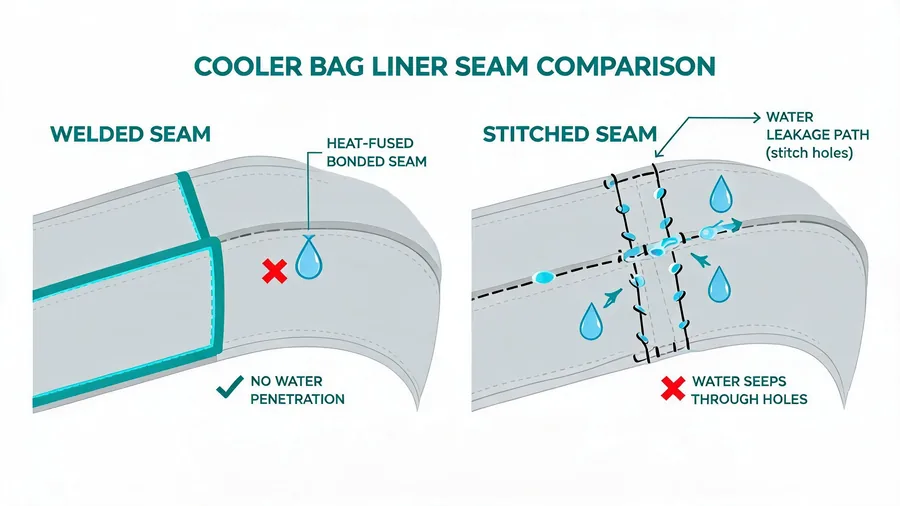
Seams matter just as much. Ordinary stitched seams leak at the needle holes. Heat-welded seams don't. Taped seams cover the stitching with a waterproof strip. Some cooler bags use heat-welded seams on the liner where loose ice is expected. That's the construction you want for loose ice.
Say a buyer compares two cooler bags. One has a stitched polyester lining and no tape. The other has a welded waterproof liner and taped seams. Both cost within ten percent of each other. The first will leak with loose ice. The second won't. The difference is in the spec sheet, not the marketing copy.
Meltwater Management and Drainage
Loose ice produces water. That water has to go somewhere. Three options exist. You contain it, you drain it, or you let it soak into the bag. The third option is always wrong.
Containment means the liner is fully sealed and the bag has no drainage hole. The meltwater stays inside until the user pours it out. This works for short trips. It keeps the cold water in contact with the contents, which actually helps cooling. But the bag gets heavy, and the user has to dump the water carefully.
Drainage means the bag has a reinforced eyelet or plug at the lowest point. A drainage eyelet is a reinforced opening that allows water to escape from a washable or wet-use compartment. The user can open it to release meltwater without tilting the whole bag. This is common on marine cooler bags and some food delivery bags. If the bag has a drainage eyelet, it's a strong signal the manufacturer expected loose ice or wet contents.
Ask yourself a blunt question. Does the bag have a drainage eyelet? If yes, loose ice is probably fine. If no, check the liner and seams before saying yes.
Condensation and What It Does to Insulation Over Time
Condensation is different from meltwater. It forms on the outside of the bag when warm, humid air hits the cold outer surface. It also forms inside the insulation if moisture gets trapped there. The outside condensation wipes off. The inside condensation doesn't.
Here's the slow failure. Loose ice chills the liner. The liner chills the insulation. Warm air from outside carries moisture. That moisture condenses inside the insulation cavity. Over many cycles, the insulation gets damp. Damp insulation conducts heat better than dry insulation. The bag loses cold-hold performance. The user adds more ice to compensate. That adds more water. The cycle continues.
A bag with a sealed liner and welded seams slows this down. The moisture can't get into the insulation in the first place. A bag with stitched seams and no tape doesn't slow it down at all. The water goes straight through the needle holes on day one.
For more on how insulation materials affect performance, see our guide on cooler bag materials.
Alternatives to Loose Ice
Loose ice works. It's cheap and available everywhere. But it's not always the best choice. Sealed gel packs, block ice in a bag, and dry ice each have a role.
Sealed gel packs are the cleanest option. They don't leak. They freeze solid and melt slowly. They can be reused. The downside is that they cost more than ice and need freezer space. A medical courier using medical cooler bags will almost always use gel packs, not loose ice.
Block ice in a sealed bag gives you the thermal mass of ice without the loose water. The bag contains the melt. The user replaces the whole bag when it's done. This is a good middle ground for food delivery and catering. It's not as clean as gel packs, but it's cheaper and easier to source.
Dry ice is a different animal. It's solid carbon dioxide, not water ice. It sublimates into gas instead of melting into liquid. That means no meltwater. But dry ice is extremely cold and can damage the liner if it touches it directly. It also releases carbon dioxide gas, which can build up in a sealed bag or vehicle. The CDC and OSHA have safety guidance for handling dry ice. Check current guidance from those agencies before using dry ice in any delivery operation. Never seal dry ice in an airtight container.
How to Tell If a Specific Bag Is Built for Loose Ice
Look at three things. Liner material, seam type, and drainage.
First, the liner. A waterproof liner is smooth, coated, or film-based. It feels slick, not fabric-like. If the liner looks like the inside of a raincoat, it's probably waterproof. If it looks like the inside of a gym bag, it's not.
Second, the seams. Turn the bag inside out. Look at the liner seams. Are they stitched only? Are they taped? Are they welded? Stitched only means water will get through. Taped means the stitching is covered. Welded means there are no needle holes at all.
Third, the drainage. Look for a grommet, plug, or eyelet at the bottom. If it's there, the bag was designed for wet use. If it's not there, the bag may still work, but you need to trust the liner and seams completely.
A buyer who checks all three before ordering won't get surprised. A buyer who orders by price alone will. We've seen it happen too many times.
If you're sourcing cooler bags for food delivery, our food delivery cooler bag page covers the construction details that matter for daily ice use. For custom branding, see promotional cooler bags.
Refrigerant Options Compared
| Refrigerant | Meltwater | Reusability | Best for | Main risk |
|---|---|---|---|---|
| Loose ice | Yes, significant | No | Short trips, high volume, low cost | Leakage through seams |
| Block ice in sealed bag | Contained in bag | No | Food delivery, catering | Bag can tear |
| Sealed gel packs | None | Yes | Medical, meal kits, long trips | Higher cost, freezer space |
| Dry ice | None, sublimates | No | Frozen shipping, long hauls | Extreme cold, CO2 gas buildup |
No single option wins for every use. Loose ice is the default because it's free at most hotels and gas stations. Gel packs win when cleanliness and reuse matter. Block ice in a bag splits the difference. Dry ice is a specialized tool for frozen shipping.
The bag has to match the refrigerant. A bag built for gel packs might not survive loose ice. A bag built for loose ice will handle gel packs fine. Spec the bag for the hardest use you expect. That's the rule.
Questions about a specific bag? Ask us directly. We'll tell you whether the construction will hold up to loose ice, and we won't guess.
FAQ
Will loose ice leak through a cooler bag?
It depends on the liner and seams. A stitched liner without tape or welding will leak at the needle holes. A welded or taped waterproof liner will contain the meltwater.
How do I know if my cooler bag can hold ice?
Check three things. A slick, coated liner means waterproof. Taped or welded seams mean water can't get through the stitching. A drainage eyelet means the bag was designed for wet use.
Is dry ice safe in a cooler bag?
Dry ice can damage the liner and releases carbon dioxide gas. Check current CDC and OSHA guidance before using it. Never seal dry ice in an airtight container.
Why does my cooler bag get wet on the outside?
That's condensation. Warm, humid air hits the cold outer surface and water forms. It's normal. But if the inside insulation gets wet from leaking meltwater, the bag loses cold-hold performance over time.