Why Are Coolers So Expensive? A Manufacturer's Breakdown
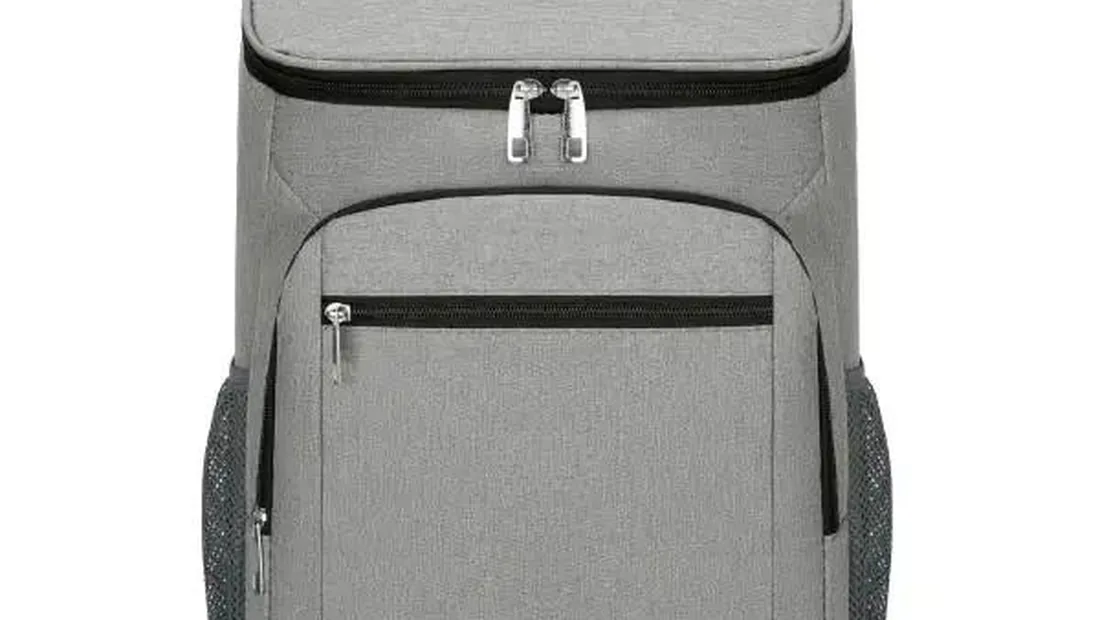
Why are coolers so expensive? It's the question every sourcing manager asks when a soft cooler quote lands far above a basic tote. The short answer: a cooler is not a bag. It's a thermal system that has to be built, sealed, and tested. Two coolers can sit side by side on a shelf, look nearly identical, and differ by a factor of three in cost. The difference is rarely the logo.
I've quoted hundreds of cooler builds. The price breaks down into a handful of predictable places. Once you see where the money goes, you'll know what to push back on and what to leave alone.
Where the Money Actually Goes
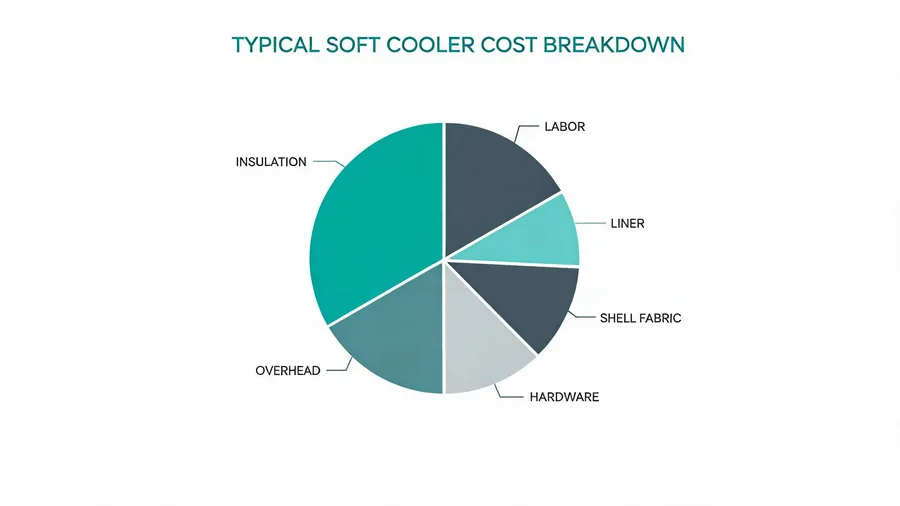
Most buyers assume fabric is the big cost. It's not. In a soft cooler, the insulation system and the labor to seal it usually eat more of the budget than the shell. A basic polyester tote with a foam sheet sewn in is one product. A cooler with continuous closed-cell foam, a welded liner, and a sealed zipper is a different product entirely.
Here's the cost-driver table I use when a buyer asks why one quote is double another.
| Cost driver | Cheap build | Expensive build |
|---|---|---|
| Insulation | Thin, loose foam sheet, gaps at corners | Thick closed-cell foam, cut to fit, continuous coverage |
| Reflective barrier | None or printed foil look | Metallized film positioned between insulation and liner |
| Liner | Stitched PEVA, leaks at seams | Welded TPU or high-frequency sealed liner |
| Closure | Standard zipper, no seal | Water-resistant zipper or roll-top with stiffener |
| Seams | Stitched only | Stitched plus taped or welded |
| Labor | Simple tote assembly | Multi-stage sealing, alignment, and testing |
Every line in that table is a decision. And every decision changes both cost and performance.
Insulation: Thickness Is Only Half the Story
The foam inside a cooler does the heavy lifting. Closed-cell polyethylene foam and polyurethane foam are the standard choices. Closed-cell foam resists moisture absorption and holds structure. That matters because a cooler's foam has to survive condensation, melted ice, and being crushed in a car trunk.
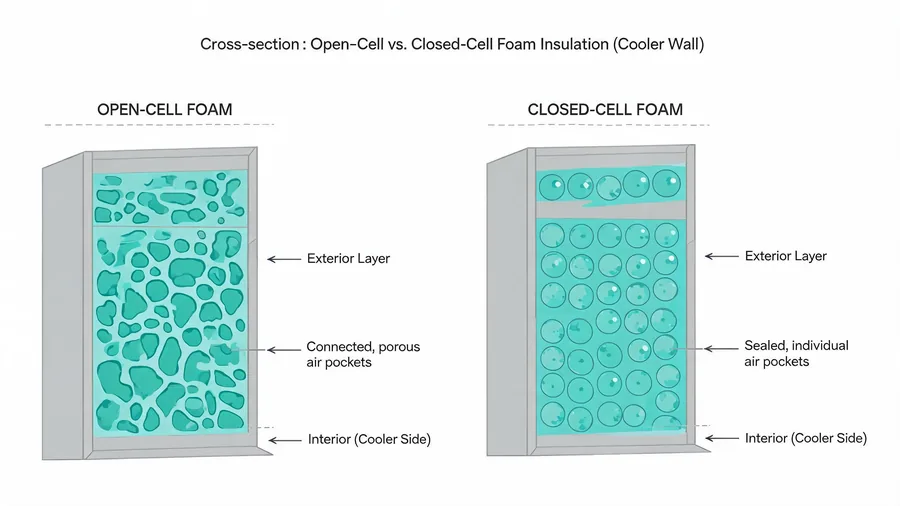
Thickness gets all the attention. It's easy to spec. But continuity is where cheap coolers quietly fail. If the foam is cut as separate panels and sewn into place with gaps at the corners, heat finds those gaps. The bag looks insulated. It isn't.
A proper build cuts the foam to match the pattern exactly. Corners are mitered or overlapped. The foam sits flush against the shell and the liner. No air pockets. No compression points where a stitch line crushes the foam into a thermal bridge. That precision cutting costs more in material yield and in labor. A factory can punch out a generic foam sheet in seconds. Cutting, fitting, and aligning five panels that meet cleanly takes real minutes per unit.
Expanded polyethylene foam, the kind most soft coolers use, is not exotic. The cost difference is in how it's specified and installed. A buyer ordering 800 units in three colors will see the per-unit foam cost move noticeably when the spec changes from "loose insert" to "fully fitted, glued at all seams."
The Reflective Barrier and the Liner
A metallized film layer can reduce radiant heat transfer, but only if it's positioned correctly. Some cheap coolers print a foil look on the liner and call it a day. That does nothing. A real reflective barrier sits between the insulation and the liner, with the metalized side facing the warm side of the wall.
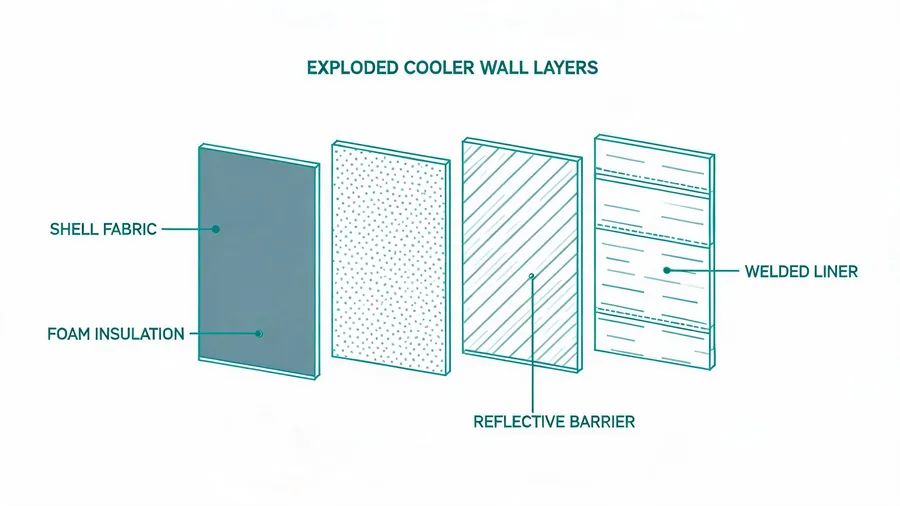
The liner is where leaks happen. A stitched PEVA liner is cheap. It's also porous at every needle hole. For a cooler that holds loose ice or drinks in condensation, those holes weep. The fix is a welded liner. Thermoplastic polyurethane film can be high-frequency welded into a sealed tub. That's a different machine, a different skill set, and a different price.
Some builds use a stitched liner with seam tape over the needle holes. It's cheaper than full welding and better than nothing. But tape can lift over time, especially with repeated flexing and cleaning. A buyer who wants a genuine leakproof claim needs the welded version. And that claim has to be tested, not assumed.
Closure Systems and Hardware
The closure controls air exchange. A standard zipper lets warm air move freely. A water-resistant zipper with a coated tape slows that exchange. A roll-top closure with a stiffener bar is better again, but it changes the user experience and the pattern.
Hardware costs climb fast. Oversized zipper pulls, reinforced handles, D-rings, bottle openers, padded shoulder straps. Each one adds a component cost plus a labor step. A simple tote might have one zipper and two handles. A fully featured cooler has a main zipper, a front pocket zipper, a side handle, a shoulder strap with two swivel hooks, and maybe a bottle opener sewn into the webbing. That's five or six extra operations per unit. Operations are minutes. Minutes are money.
Zipper cycling matters too. A cooler zipper gets opened and closed far more often than a backpack zipper, and it's usually wet. A cheap zipper fails in the field. A mid-range zipper from a known supplier costs more but survives. This is not the place to save three cents.
Labor: The Tote vs. The Sealed Build
Here's the blunt truth. A simple insulated tote can be sewn by a line worker in a few minutes. A fully sealed cooler takes several times longer. The liner has to be welded. The foam has to be fitted. The reflective barrier has to be oriented correctly. The zipper has to be set into a coated tape without puckering. Each stage has to be inspected before the next one starts.
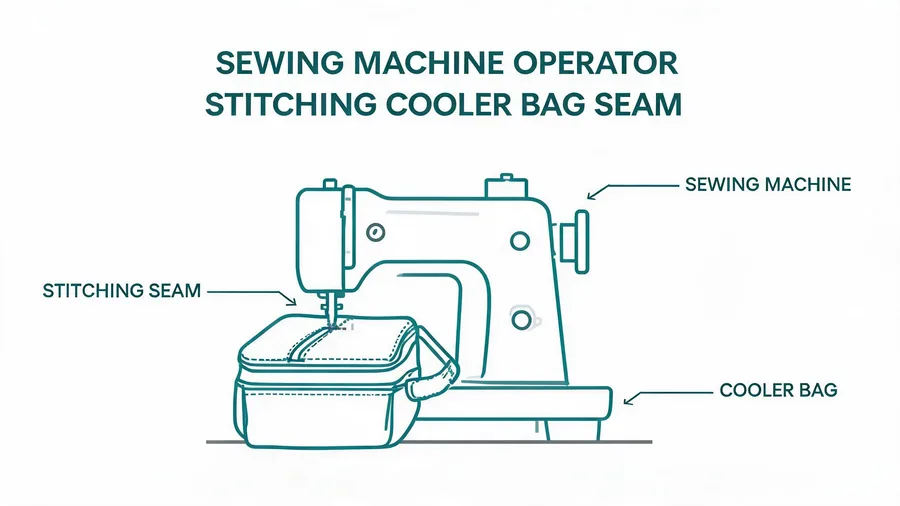
That's the real reason coolers are expensive. Not the materials. The sequence.
A tote is a flat assembly problem. Panels get sewn in order and the bag is done. A cooler is a three-dimensional sealing problem. If the liner is welded wrong, you can't just unpick a stitch and redo it. The part is scrap. That scrap rate gets priced into every unit.
Our OEM process page walks through the stages a custom cooler goes through. You'll see why a sealed build has more inspection gates than a simple bag. The process exists because mistakes compound.
Why Two Identical Coolers Perform Differently
You've seen it. Two coolers, same dimensions, same claimed ice retention. One keeps drinks cold for a weekend. The other is warm by lunch. The difference is almost always in two places: insulation continuity and closure sealing.
If the foam is interrupted at the corners, heat pours through the gaps. If the zipper doesn't seal, every opening cycle flushes the cold air out. The wall insulation can be excellent and the bag still fails because the closure leaks. Opening frequency dominates real-use temperature loss. That's not marketing. It's how heat transfer works.
A cheap cooler usually economizes on those two things first. The foam gets thinner and the corners get sloppier. The zipper is a standard coil with no coating. The liner is stitched. The result looks like a cooler in photos and behaves like a tote in the field.
When you're comparing quotes, ask for the construction details. Not the marketing sheet. The actual spec: foam type, foam thickness, how corners are joined, whether the liner is welded, what zipper is used. If the supplier can't answer those questions, the price difference is not a mystery.
What Justifies a Higher Price
Some costs are worth paying. Continuous insulation, a welded liner, a water-resistant zipper, and proper testing. These are the things that make a cooler actually cool. A cooler that fails in the field costs you more in returns and reputation than the unit price ever saved.
Some costs are not worth paying. Fancy trim, oversized logos, decorative hardware that adds operations without adding performance. A bottle opener is nice. It doesn't keep anything cold. If your buyer is price-sensitive, cut the decoration before you cut the foam.
Testing is another justified cost. A cooler bag thermal test logs internal temperature under a controlled ambient profile. A condensation test checks for pooling and seam leakage. These tests cost money per batch. They also catch failures before your customer does. If a supplier quotes a price with no testing line item, ask who pays when the first production run leaks.
For ready designs, our insulated cooler bag and lunch cooler pages show how different specs land at different price points. Same category, very different builds.
How to Talk to Your Supplier About Cost
Don't ask for a cheaper cooler. Ask for a different construction. Say what the cooler has to do, not what it has to cost. A cooler that holds drinks for six hours in a shaded car is a different spec from one that holds medical samples for a day in direct sun.
Ask these questions:
- What foam type and thickness is quoted?
- Are the corners continuous or are there gaps?
- Is the liner welded or stitched?
- What zipper is specified?
- What tests are included in the quote?
If the answers are vague, the quote is vague. A good factory can tell you exactly what you're paying for. We can. Reach out through our contact page with your target spec and I'll tell you where the money goes.
The honest answer to why coolers are so expensive is that a real cooler is an engineered product. A cheap one is a bag with a foam sheet. Once you know the difference, the price stops looking arbitrary.
FAQ
Why do two soft coolers that look the same cost so differently?
The visible shell is often similar. The difference is inside: foam continuity at the corners, whether the liner is welded or stitched, and what zipper is used. A cheap cooler usually cuts costs on insulation coverage and closure sealing first.
Is a thicker foam always a better cooler?
Not by itself. Thickness matters, but so does continuity. If the foam is cut as separate panels with gaps at the corners, heat finds those gaps no matter how thick the panels are. Fit and coverage matter as much as thickness.
What is the difference between a stitched and a welded liner?
A stitched liner has needle holes at every seam. Those holes can weep when the cooler holds ice or condensation. A welded liner uses heat or high-frequency sealing to create a continuous tub with no stitch holes. It costs more and leaks less.
Why does a cooler zipper cost more than a normal bag zipper?
A cooler zipper is opened and closed far more often, usually while wet. It needs a coated tape and a more durable coil to survive that use. A standard zipper fails quickly in that environment. The extra cost buys field life.