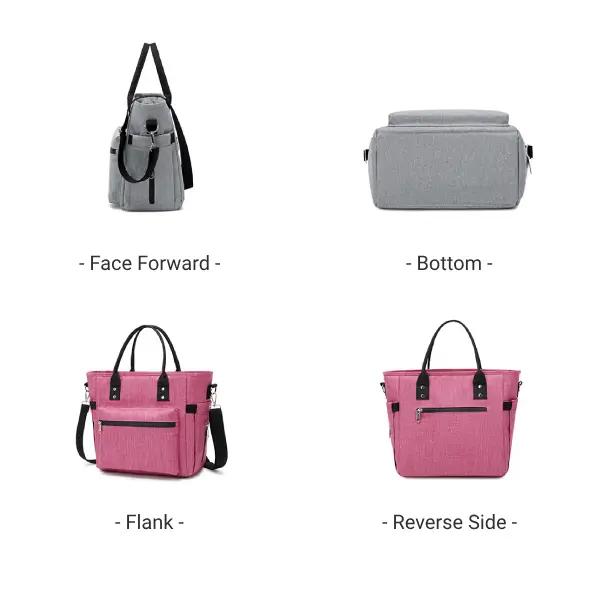
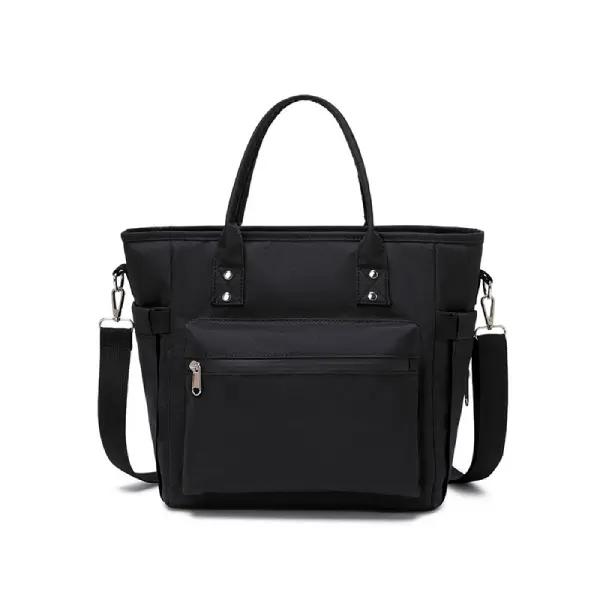
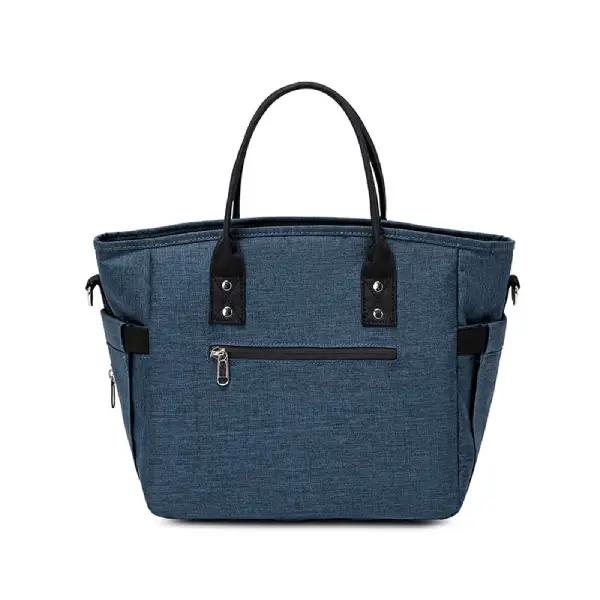
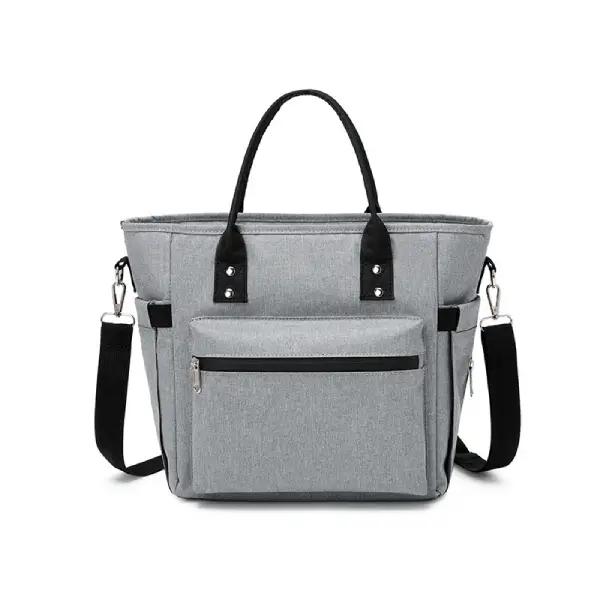
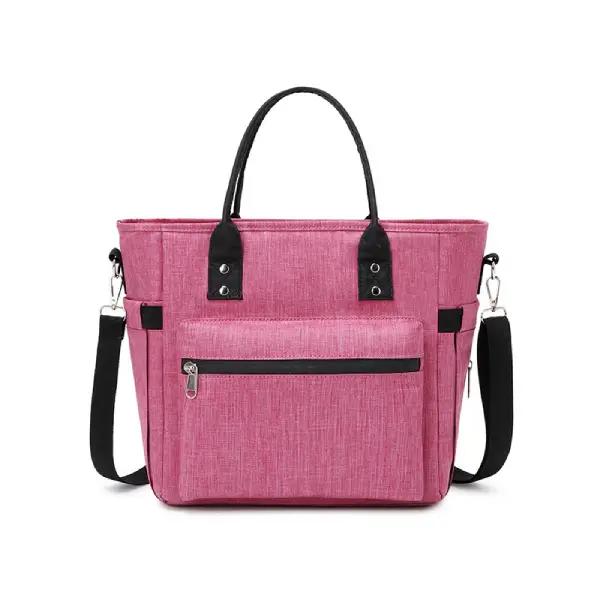
New Design Premium Waterproof Oxford Tote Customized Insulation Bag Logo Custom Insulated Thermal Bags
| Material | Oxford |
|---|---|
| Type | Cooler Bag,Lunch Bag,Picnic Bag |
| Dimensions | 27cm*15cm*28cm (Customized Made) |
| Color | (Customized Made) |
| Custom Logo | Accept Customized Logo |
| Printing/Design | Customers’requirements |
Lead time
| 1-300 pieces | 20-30 days |
|---|---|
| > 300 pieces | To be negotiated |
Samples are paid and ship in 1-10 days depending on complexity. We reply within 24 hours.
Product notes
- Experienced Manufacturer: We are a seasoned manufacturer specializing in producing high-quality cooler bags, lunch bags, and picnic bags using durable oxford material.
- Flexible Customization: We offer customization options, including size, colors, handle styles, and materials, to meet your specific needs, with ODM & OEM services available.
- Quick Sampling & Production: Our sample lead time ranges from 3 to 15 days, with production time between 7 to 30 days after sample confirmation, depending on the order quantity.
- High Production Capacity: With a production capacity of 20,000 pieces per day, we can efficiently handle large orders.
- Convenient Payment Options: We accept payments through PayPal for a secure and straightforward transaction process.
Related cooler bags
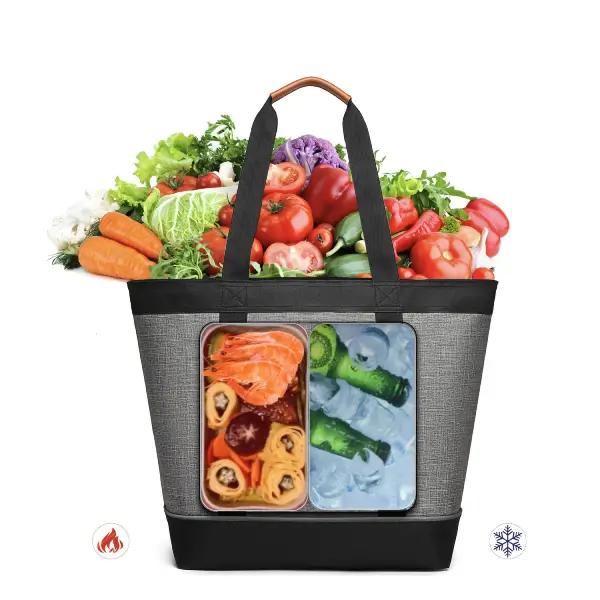
Waterproof Oxford tote lunch bag, insulated and built for logo customization.
View specifications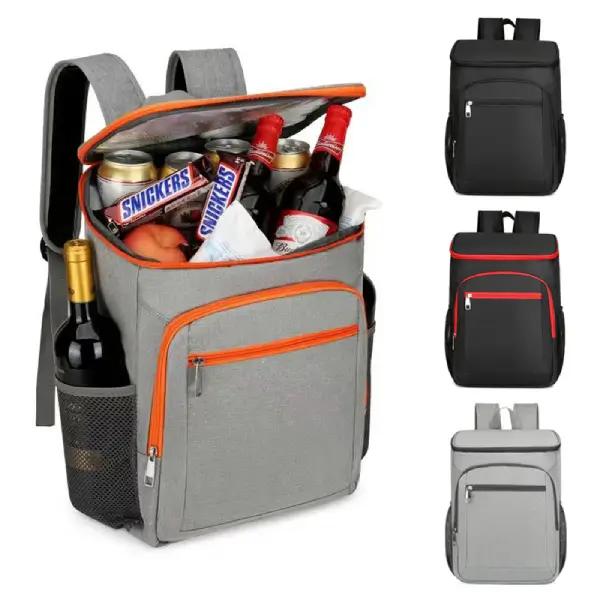
Waterproof Oxford insulated backpack, a hands-free thermal delivery format.
View specifications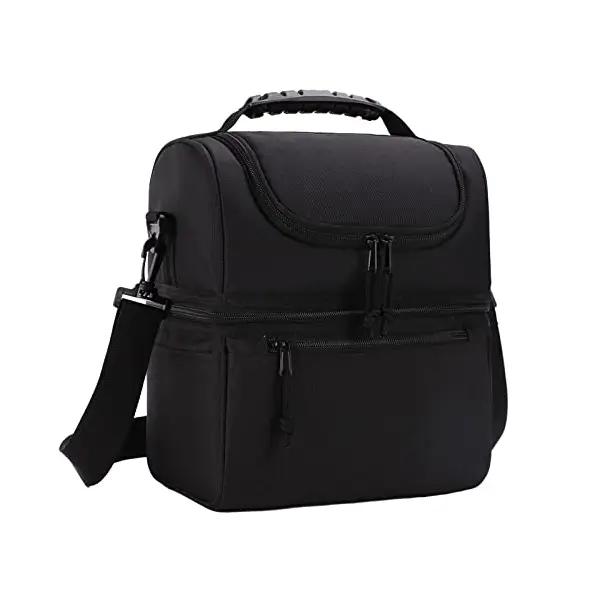
Compact double-layer polyester lunch cooler tote for daily carry.
View specificationsCustomize the CB-3984
Your dimensions, colors and logo on this base design. MOQ 500 pieces.
What This Insulated Thermal Tote Bag Construction Is Good At, and Where It Is the Wrong Choice
An insulated thermal tote bag built from oxford material gives you a shell that handles daily knocks better than a soft-sided polyester film bag. Oxford weave is dense. It resists snags from keys, bag corners, and repeated loading into a car trunk. The insulation inside is what does the thermal work, and the oxford shell protects that insulation from compression damage. That matters more than buyers expect. A torn outer shell lets moisture reach the foam, and wet foam loses thermal performance fast.
This size, 27cm by 15cm by 28cm, is a lunch-and-small-errand format. It holds a meal container, a few cans, or a bottle plus an ice pack. It is not a grocery hauler. The base is narrow enough to slide into a backpack or sit on a passenger seat without tipping. But the same dimensions limit what you can carry. A buyer who wants to fit a large family picnic spread will find this bag too tight. So will someone carrying wide glass containers. The dimensions are the spec, not a suggestion.
The table below maps each published value to what it means in use.
| Published spec value | What it means in use | What a buyer should watch for |
|---|---|---|
| Oxford Type | A woven shell with good abrasion resistance and a clean surface for printing. | Confirm the coating on the back side. Uncoated oxford leaks at the seams faster than coated oxford. |
| Cooler Bag, Lunch Bag, Picnic Bag | The same base construction can be positioned for three different retail uses. | Don't let one product page serve three markets. Pick the primary use before sampling so handles and liner match that use. |
| 27cm*15cm*28cm | A compact tote with a narrow footprint. Easy to carry, limited payload. | Test it with the actual container the customer will use. A 28cm height sounds fine until a tall thermos doesn't fit. |
| Customized Made | Dimensions, color, and logo are not locked to a stock item. | Custom dimensions change the pattern, the cutting yield, and the foam blank size. That is a longer runway, not a color swap. |
| Custom Logo | Your branding can be applied in several methods. | Logo method affects minimums and lead time. A woven label and a heat-transfer print are not the same project. |
Where is this bag the wrong choice? If you need a rigid tub that stands open on its own, this is not it. The oxford shell is flexible. It needs contents inside to hold its shape. If you need a bag that can sit in direct sun for hours, the outer shell will get hot even if the liner works. Oxford is not a radiant barrier by itself. And if your buyer wants a crushed-ice load, the seams become the weak point. Cold water finds every stitch hole unless the liner is sealed. Ask about the liner, not just the shell. A bag can look tough and still leak at the zipper.
How Buyers Customize This SPU, and What Each Change Does to Tooling, Cost or Lead Time
Customization on this product splits into two lanes. The first lane is routine. You change the color of the oxford, add a logo, or pick a different handle style. These changes are handled in the cutting and printing stage. No new tooling is required. The pattern stays the same. A new color means a new fabric lot, which can add a few days if the color is not in stock. A logo adds a setup step. The logo method you choose sets the minimum and the cost, not the bag itself.
Pantone matching is available. Buyers who need a precise brand color specify a Pantone number and the factory matches to a tolerance. The published standard is ΔE≤2.0, but that is a general capability, not a promise for this specific oxford lot. Confirm the target on the approved sample. A dark oxford shows color differently than a light one, and the same Pantone ink will read differently on each.
The second lane is structural. You change the dimensions, the insulation thickness, the liner material, or the closure type. These changes require new pattern work. The foam blank is cut to the new size. The zipper length changes. The sewing sequence may need rebalancing. This is not a color swap. It is a new sample from scratch. Lead time stretches because the pattern must be drafted, cut, and tested before the sample is sewn. A buyer who asks for a 35cm height is not asking for a bigger version of this bag. They are asking for a new bag that looks like this one.
Logo methods carry different minimums. A woven label can start around 300 pieces. A metal badge around 200. Heat-transfer PVC around 500. Laser engraving around 100. Reflective logos around 1000. Hidden logos around 50. A changeable system around 1000. These are general thresholds for this product category, not a quote for this specific SPU. Your account manager will confirm the exact minimum for the method you choose. The point is that a buyer who wants a hidden logo for a 500-piece order may be fine. A buyer who wants reflective logos for 200 pieces will need to rethink the method.
What to Confirm Before You Approve Sampling on This Product
Sampling is where the rework happens. Most rework on cooler bags comes from three places: the liner seal, the zipper clearance, and the handle anchor. Confirm all three in writing before the sample is cut.
First, the liner. Ask whether the liner is a separate sewn bag or a heat-welded insert. A sewn liner has stitch holes. Those holes leak unless seam tape covers them. A welded liner is cleaner but changes how the bag folds at the corners. Tell the factory what you will put in the bag. A buyer who carries ice packs and condensation needs a different liner than a buyer who carries dry snacks.
Second, the zipper. The zipper sits along the top edge of this tote. If the insulation is thick, the zipper tape must be wide enough to clear the foam. A too-short zipper tape pulls the top edges inward and makes the opening smaller than the spec. Confirm the zipper length after the foam is in place, not before.
Third, the handles. The handles on an oxford tote are sewn to the shell. If the shell is coated, the coating can crack at the stitch line under load. Ask for a reinforcement patch or box stitch at the anchor. That is a small detail that prevents a big return.
Write these checks into the approved sample: liner seam test with water, zipper open-close cycle at full load, and a handle pull test at the stated weight. Do not accept a sample that has not been tested with the actual payload. A cooler bag that works empty tells you nothing.
For buyers comparing this to other formats, see how cooler bag materials change insulation or insulated cooler backpacks for a wearable alternative. If you are still deciding on the ice load, this guide on ice hold time helps you set expectations before sampling.