Custom Grocery Cooler Bags: OEM Spec and Branding
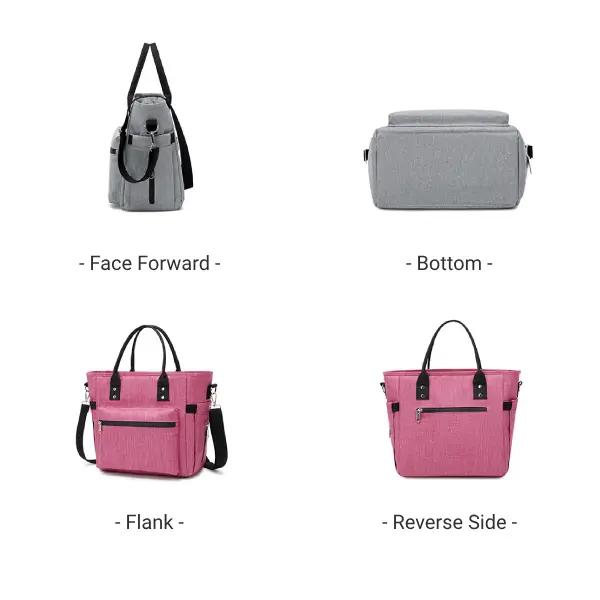
Say a regional grocery chain wants 6,000 insulated totes for a summer frozen-food promotion, in two sizes and three store colors, with the chain's logo on the front panel. That order is not a catalog purchase. Custom grocery cooler bags are built from a spec sheet, and the sheet is what separates a bag that survives a year of weekly loading from one that delaminates by August.
Most of what ranks for this search is promotional stock: a fixed tote, one-color imprint, a unit price and a shipping date. Useful if you need 200 bags for a conference. Useless if you are a retailer putting your name on a bag that customers will refold, wipe down and stuff with frozen chicken.
What a Grocery Cooler Bag Actually Is (and Why Private Label Differs from Promo Stock)
A grocery cooler bag is an insulated tote sized for chilled and frozen groceries: a shell, an insulation layer, a reflective barrier, a wipeable liner, a closure and a carry system. That is the whole anatomy. Simple product. The complexity lives in how those layers are specified and joined.
Stock promo totes are built to a price and a deadline. The factory chooses the foam, the liner and the seam because nobody asked. Private label grocery cooler bags invert that: you choose, in writing, before anything is cut.
Why does it matter for a grocery retailer specifically? Because your bag gets abused in a way a conference giveaway never does. It sits in a wet trunk. It gets folded flat under a seat. It carries a load that sweats. Repeated loading, moisture and folding are the three failure modes, and each one traces back to a line on the spec sheet.
Choosing the Shell Fabric for Custom Grocery Tote Bags
The shell is the outer face. It carries the print, takes the abrasion and provides the first layer of weather protection. Three families dominate: polyester, nylon and canvas.
Polyester is dimensionally stable, prints well and comes in a wide spread of weights, weaves, coatings and recycled-content options. Nylon brings high strength-to-weight and good abrasion resistance, though coating and weave decide how water-resistant it really is. Canvas is a durable plain weave, usually cotton or a blend, chosen for structure and texture.
Two numbers describe the shell on a spec sheet. Denier is a yarn linear-density unit used for synthetic fabrics, and it does not directly state finished-fabric strength. GSM is grams per square meter, the mass per area of the fabric or composite. Quote both, plus the coating, or you will get three different fabrics under one name.
Coated or uncoated
A polyurethane or PVC coating improves water resistance, hand feel or durability. It also changes how the face accepts ink and how easily it wipes clean. Uncoated canvas looks better and stains faster. For a grocery bag that will meet spilled milk, a coated face is usually the right call, and the print method has to be chosen to suit it.
Retailers with sustainability targets can specify recycled-content shell fabric, including rPET. Ask the supplier to state the recycled content as a percentage on the spec, not as a word on the hangtag.
Foam, Liner and Seam Construction: the Thermal Core of the Bag
Insulation is where cold-hold performance is won or lost, and it is the part buyers specify most vaguely. Closed-cell polyethylene foam, expanded polyethylene foam and EVA are the common choices: low-absorption, structural, thermally useful. Thickness, cell structure, density and continuity all influence heat-transfer resistance.
Closed-cell PE/XPE/EVA foam in the 8 to 15 mm range is a normal specification band for a grocery tote. Where the foam is thinned to save cost, or interrupted at a seam, you create a thermal bridge. That is a path for heat to travel straight through the wall.
A metallized film or foil-faced layer, correctly positioned in the stack, reduces radiant heat transfer. An aluminium PET liner is the usual form. Position matters: put it on the wrong side of the foam and you have paid for a shiny surface that does nothing.
Liner and seams
The inner liner gives you a cleanable interior and can help contain moisture. Heat-welded seams and waterproof zippers hold a barrier better than stitching, which perforates the film. Stitched seams are cheaper and fine for dry goods. For a bag carrying thawing frozen food, the seam decision is a moisture decision.
Closure controls air exchange at the opening. Zippers, roll-top closures and overlapping flaps seal differently, and opening frequency plus zipper gaps can dominate real-use temperature loss even when the walls are well insulated. A tight zipper on thin foam beats a loose flap on thick foam.
One honest note on cold-hold claims: any temperature figure is meaningless without the test method, ambient condition, starting temperature, load, refrigerant quantity and acceptance limit. If a supplier quotes a hold time with no conditions attached, ask for the conditions. The values belong in the approved specification, not in a headline.
Logo Methods for Branded Grocery Cooler Bags
Decoration is constrained by the surface it lands on. A coated polyester face and a soft EVA liner accept very different processes.
| Method | How it works | Best fit on a cooler bag |
|---|---|---|
| Screen printing | Ink forced through a prepared screen | Solid colors on flat coated panels, repeat runs |
| Heat transfer | Prepared graphic bonded with heat and pressure | Multi-color or detailed art; adhesion and wash performance must be validated |
| Woven label | Design created by interlacing yarns | Small, durable branding; handles and trim |
| Embroidery | Thread stitched into the material | Front panels and handles; watch stitch density and panel distortion |
| Debossing | Recessed mark formed by pressure, sometimes heat | PU or synthetic leather patches, low-key branding |
Artwork comes in two parts: a vector file for the shape and a Pantone reference for the color. Pantone matching is a spec line, not a conversation. Write the acceptable color difference into the sheet so the first production run and the third one match. If the logo sits across a seam or a curve, say so on the drawing, because that is where registration drifts.
Building the OEM Spec Sheet Step by Step
Here is the field list a factory needs before it can quote, and before it can cut anything. Copy it.
- Dimensions (external, and internal usable volume), plus folded-flat height
- Shell: fabric type, denier or GSM, coating, color, recycled content if claimed
- Foam: type (PE, XPE, EVA), thickness, and where it must not be interrupted
- Reflective layer: material and position in the stack
- Liner: material, cleanability, moisture containment
- Seams: stitched or heat-welded, taped or not
- Closure: zipper type, roll-top, flap; slider and pull specification
- Handles: webbing type, width, attachment and reinforcement
- Logo: method, placement drawing, Pantone reference, size
- Packaging: poly bag, color box, gift box with handle bag, branded poly mailer, hang tag with poly bag, or dust bag
- Tolerances and acceptance criteria: how far a dimension may drift, what counts as a reject
That last line is the one buyers skip and regret. "Navy blue, good quality" is not a specification. A measurement with a tolerance and a written acceptance limit is. For the full order sequence from inquiry to shipment, see the OEM process page.
MOQ, Sampling and Lead Time: Planning a Private Label Run
Minimum order quantity is set per style and per material, not per customer. Standard fabrics sit at one threshold; special fabrics, custom coatings and unusual colors move it higher, because the mill runs them for you. Mixed sizes and colors in one run are normal, but each combination is its own line on the production schedule.
Sampling is a paid stage. It runs in days, not weeks, and a revision round is a short follow-on step. Expect to pay for it and expect to approve it in writing before bulk starts.
Then split your timeline into two blocks. Production is one block. Shipping is another, and the method you choose (sea, rail, air, or express courier for small runs) changes the second block far more than the first. Buyers who plan them as one number are the ones who miss their promotion date.
For sizing and use-case background before you write the sheet, the insulated grocery bags guide is a sensible starting read.
Quality Checks and Documentation Before the Bags Ship
An inspection on a cooler bag looks at specific things. Seam strength, especially at handle attachments. Zipper function, opened and closed repeatedly. Foam placement, checked by feel and by cut samples, because a slipped panel is invisible from outside. Print registration against the approved artwork. Liner bonding and stitch quality.
Ask any supplier for the inspection report, the approved golden sample, and the material or composition records for the shell and liner. On certifications, a grocery retailer can reasonably ask whether a supplier holds amfori BSCI, ISO 9001, SGS, TUV or GRS. Those five are the only certification categories referenced on this site. No other certification, and no audit score, should be accepted as a claim without the certificate in hand.
If your program runs across several bag types, the same spec discipline applies to bulk insulated grocery bags and to food delivery cooler bags.
The Short Version
Specify the shell by denier or GSM and coating. Specify the foam by type, thickness and continuity. Decide the seam and closure on moisture grounds, not cost grounds. Write the logo method and Pantone reference into the sheet. State tolerances. Pay for the sample and approve it in writing. Then plan production and shipping as two separate clocks.
When your spec sheet is ready, send it through the contact page and ask for a quote against it.
FAQ
What is the minimum order for custom grocery cooler bags?
It is quoted per style, not as one figure for every bag. Standard fabrics sit at one threshold and special fabrics, custom coatings or unusual colors move it higher, because the mill has to run them for your order. Mixed sizes and colors within one run are normal, but each combination is scheduled separately. Send the spec sheet and the quantity mix, and the MOQ comes back against that exact build.
Can custom grocery cooler bags be made with no minimum?
Not as a true private-label build. A no-minimum order means stock product with an imprint, where the factory already made the bag and only adds your logo. Once you change the shell, the foam thickness, the liner or the closure, tooling and material runs start, and that is what sets a minimum. If you need a small quantity fast, ask for stock styles with decoration rather than a custom build.
How do I order custom grocery cooler bags with a logo?
Write the logo method, placement drawing, size and Pantone reference into the spec sheet first. The surface decides the method: screen print for solid colors on flat coated panels, heat transfer for detailed multi-color art, embroidery or a woven label where you want texture. Approve a physical sample with the logo applied before bulk production, because registration and color drift are cheapest to fix at that stage.
What is the difference between custom grocery cooler bags wholesale and bulk pricing tiers?
Wholesale usually means buying a stock bag in volume from a catalog. A bulk tier is a discount step inside that catalog, tied to quantity. Neither changes the bag. A private-label build is a different arrangement: you own the specification, the factory makes the bag to your sheet, and the commercial terms follow the material and labor in that build rather than a published tier. Ask which of the three you are actually being quoted.