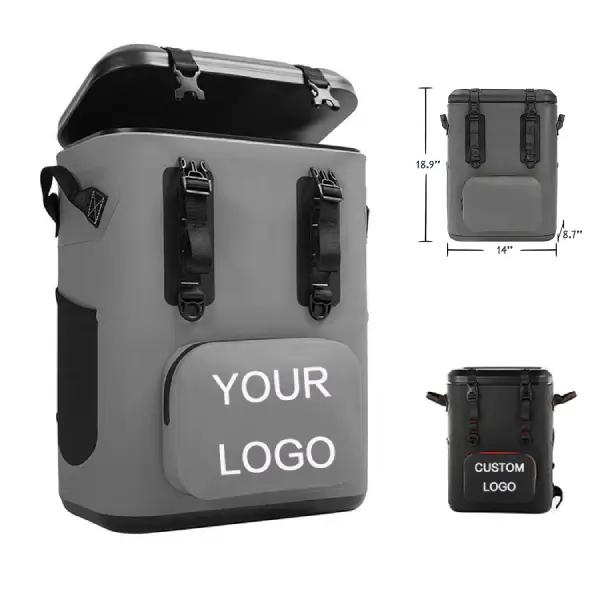
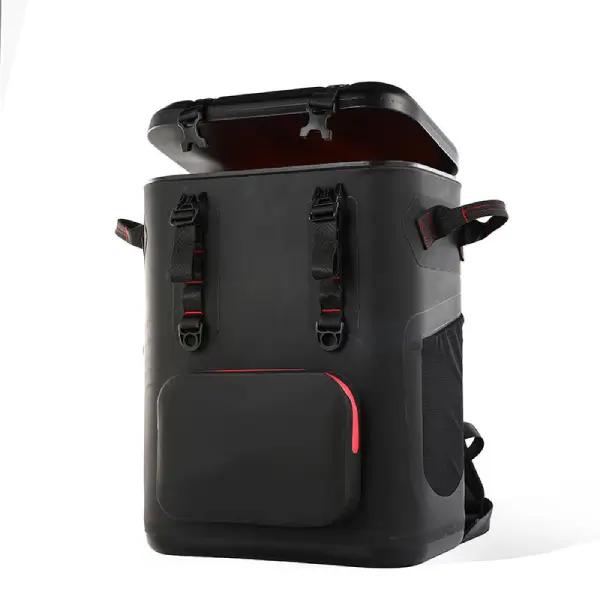
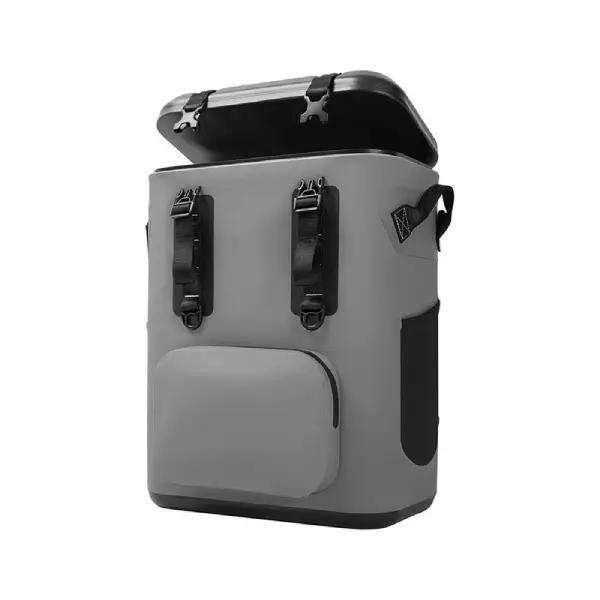
Custom Cooler Backpack with Magnetic Leakproof Insulation, Large Lightweight Soft Lunch Cooler
| Material | 420D/PVC |
|---|---|
| Dimensions | 22cm*48cm*35.5cm (Customized Made) |
| Color | (Customized Made) |
| Custom Logo | Accept Customized Logo |
| Design | Customers’requirements |
Lead time
| 1-300 pieces | 20-30 days |
|---|---|
| > 300 pieces | To be negotiated |
Samples are paid and ship in 1-10 days depending on complexity. We reply within 24 hours.
Product notes
- Superior Waterproof Performance: The 420D/PVC and TPU materials offer excellent waterproof capabilities, keeping food and beverages dry in any environment.
- Efficient Insulation: With a magnetic seal design and high-quality insulation, this backpack ensures that food and beverages maintain their ideal temperature for an extended period.
- Large Capacity & Lightweight: Despite its large capacity, the backpack is lightweight and easy to carry, making it ideal for daily use or outdoor activities.
- Customizable Design: The size, colors, handle style, and materials can be customized according to customer requirements, providing a unique market positioning for brands.
- Durable and Sturdy: High-quality materials and excellent craftsmanship ensure that this cooler backpack is durable and can withstand long-term use.
- Fast Production Time: With a short production cycle, large orders can be completed within 7-15 days after sample confirmation, meeting urgent customer needs.
- Versatile Use: While designed for insulating food, this backpack is versatile enough to be used for transporting other temperature-sensitive items.
Related cooler bags
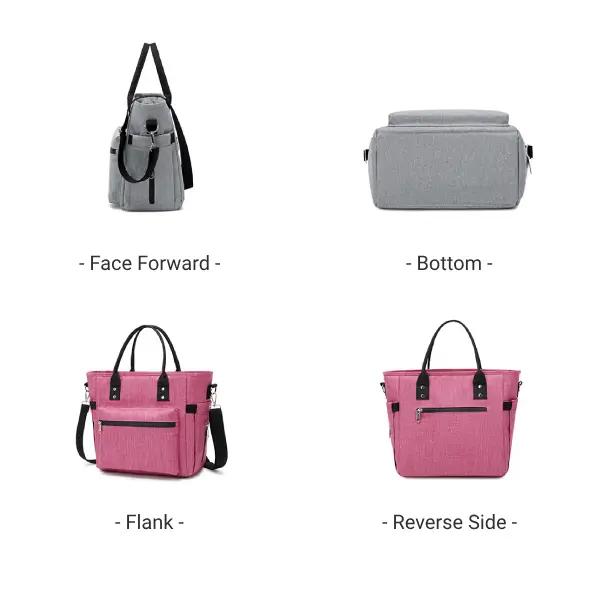
Waterproof Oxford insulated tote, a promo-friendly custom thermal bag.
View specifications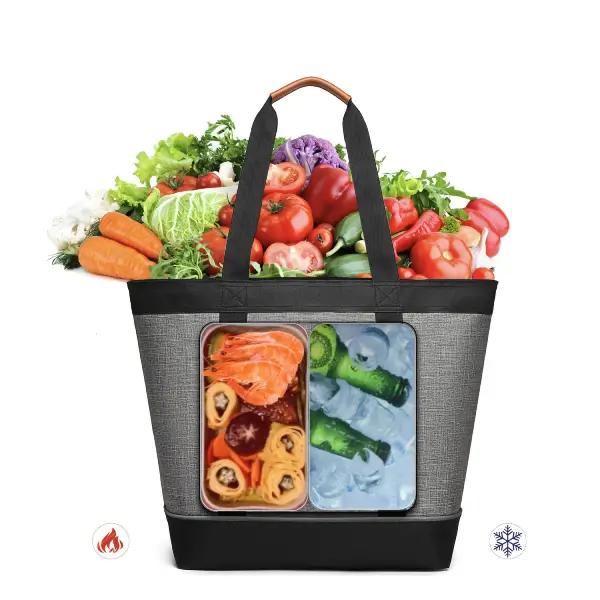
Waterproof Oxford tote lunch bag, insulated and built for logo customization.
View specifications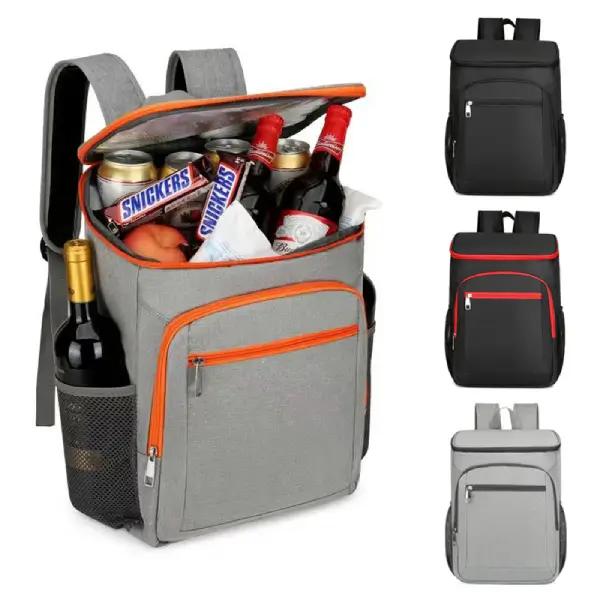
Waterproof Oxford insulated backpack, a hands-free thermal delivery format.
View specificationsCustomize the CB-4051
Your dimensions, colors and logo on this base design. MOQ 500 pieces.
What this construction is good at, and where it is the wrong choice
This leakproof soft cooler backpack uses a 420D/PVC outer shell to keep light rain and spills away from the insulation. The material is a coated woven polyester, so it flexes with the bag instead of cracking like a hard liner might. That matters when the pack is carried half-empty or stuffed into a car trunk. The published dimensions of 22cm*48cm*35.5cm give it a tall, narrow profile that sits close to the body, which is why it works as a lunch carrier and as a daypack for commuters.
The trade-off is real. A soft cooler with this footprint has a larger surface area relative to its internal volume than a cube-shaped cooler of the same capacity. Heat enters through every wall, so the shape itself works against extreme cold-hold claims. A buyer who opens the bag frequently to grab a snack will see faster warming than someone who packs once and keeps the closure shut. That is not a defect. It is how soft coolers behave.
Where is this the wrong choice? If your customer needs all-day ice retention in a hot vehicle, a rigid cooler with thick walls may beat a soft backpack, depending on the test method and conditions. The magnetic seal closure on this SPU reduces air exchange at the opening, but it does not make the bag a refrigerator. Think of it as a lunch cooler with a better-than-average seal, not a medical shipper.
| Published spec value | What it means in use | What to watch for |
|---|---|---|
| Material 420D/PVC | A coated polyester shell that resists light moisture and wipes clean. | Not a substitute for a welded dry bag. Check seam taping if full immersion is expected. |
| Dimensions 22cm*48cm*35.5cm | A tall, narrow pack that fits behind a seat or under a desk. | Confirm the internal compartment matches the external footprint. Foam thickness eats interior space. |
| Custom Logo Accept Customized Logo Design | The base bag can carry your brand mark. | Logo placement on a soft, curved surface can distort. Approve a physical sample, not a digital mockup. |
| 1-300 pieces 20-30 days | Small to mid runs have a defined production window after approval. | This is not 7-15 days. The fast lead time in the bullets applies to large orders, not this bracket. |
For a deeper look at how shell materials affect cooler performance, see our guide to cooler bag materials.
How buyers customize this SPU, and what each change does to tooling, cost or lead time
Most of the changes buyers request on this base design are routine. Changing the color of the 420D/PVC shell is a material selection task, not a tooling task. Adjusting the logo placement, size, or print method follows the standard logo process. The Pantone matching data in our program, with a ΔE≤2.0 target, applies to solid-color logo work. A woven label or a heat-pressed logo may have a different minimum order quantity in the general program figures; confirm the current table for this SPU before quoting a logo type.
Changes that need new tooling or a longer runway are the ones that alter the pattern itself. Moving a zipper, adding a front pocket, or changing the handle style means a new cutting die or pattern revision. The same is true for changing the magnetic seal system to a roll-top or a zipper-only closure. That is not a color change. That is a structural change, and it resets the sampling clock.
A buyer who wants a different insulation thickness or a TPU liner instead of the current construction should treat that as a new development, not a tweak. The published material is 420D/PVC, and the bullet mentions TPU as a material option, but the base SPU is built around the published shell. If you switch the liner, the seam sealing and the closure interface both need re-testing. That is where lead time grows quietly.
For a broader view of how insulation choices affect real-world performance, read how long ice lasts in a cooler.
What to confirm before you approve sampling on this product
Three specification points cause the most rework on this type of soft cooler backpack. The first is the magnetic seal closure. You need to confirm the magnet placement, the number of magnets, and the force required to open the closure. A seal that is too weak lets warm air in. A seal that is too strong makes the bag annoying to open one-handed. The approved sample should include a physical closure test you can feel, not just a photo.
The second is the seam construction at the base and corners. The 420D/PVC shell is coated, which means the coating can crack if the seam allowance is too tight or the stitch length is too long. You want the sample to show reinforced stitching at the bottom corners, where the bag gets set down on rough surfaces. Ask for a close-up photo of the interior seam tape, if any, before you approve production.
The third is the insulation continuity. Closed-cell foam can be compressed at the edges where the bag is sewn shut. That creates a thermal bridge, a thin spot where heat moves faster. The approved sample should be inspected for even foam thickness around the entire perimeter. If the foam is pinched flat at the seams, the bag will underperform its insulation spec, no matter how good the shell is.
Write these checks into the approved sample: closure force, seam taping, foam continuity, and logo adhesion. If you are buying for a brand that ships temperature-sensitive items, also confirm the internal dimensions with the foam installed. The published external dimensions are 22cm*48cm*35.5cm, but the usable interior is smaller. A buyer who skips this step ends up with a cooler that looks right on paper and feels small in hand. For more on how cooler bags are tested and what claims mean, see our notes on insulated coolers for breast milk.