Insulated Lunch Bags Bulk: Specs, MOQ and Ordering
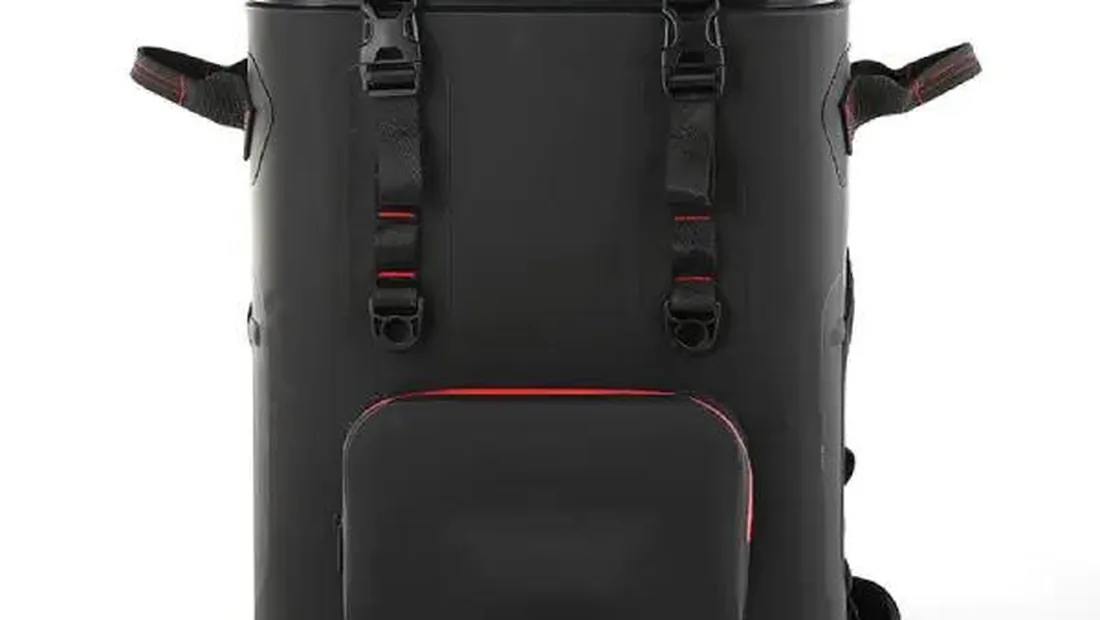
Insulated lunch bags bulk orders are not one product. They are a set of decisions. Foam thickness, liner film, shell fabric, decoration method, packaging and carton cube all get locked before a single unit is cut. Get those wrong and the per-unit price stops mattering.
Say a brand owner wants 3,000 lunch coolers for a summer gifting program. The first real question is not price. It is whether the order is stock with a logo, made-to-spec from a tech pack, or a hybrid that starts stock and moves custom later. Each path carries a different minimum, a different timeline and a different level of control.
What Bulk Really Means for Insulated Lunch Bags
Three buying modes cover most programs. Stock promo cooler plus a logo is the fastest and the least controlled. Made-to-spec OEM is the slowest and the most controlled. Mixed programs sit between them, and they are common in gifting because the buyer can test a market before committing to tooling and materials.
Here is the part buyers miss. MOQ is set per material, per color and per component, not only per finished bag. Change the shell from 210T polyester to 600D nylon and the fabric minimum resets. Add a second lining color and the liner minimum resets. A 500-piece bag order can still be blocked by one component that only runs in larger lots.
Volume lowers per-unit cost. Spec discipline lowers it more. A tight bill of materials with fewer colors, one foam grade and one liner film removes setup, waste and changeover from the run. That is where the real savings sit.
One warning. Never compare a stock promo cooler price with a custom OEM quote. They are not the same product. The stock bag uses a fixed shell, a fixed foam and a fixed decoration window. The OEM bag uses your materials, your dimensions, your labels and your packaging. The comparison is meaningless.
Foam, Liner and Shell: Choosing the Insulation Spec
Insulation is a build, not a single number. The standard construction for a lunch cooler is closed-cell PE, XPE or EVA foam at 8 to 15 mm, sandwiched between a shell and a liner. Closed-cell foam is chosen because it resists moisture. Open-cell foam absorbs water and loses performance once it gets wet.
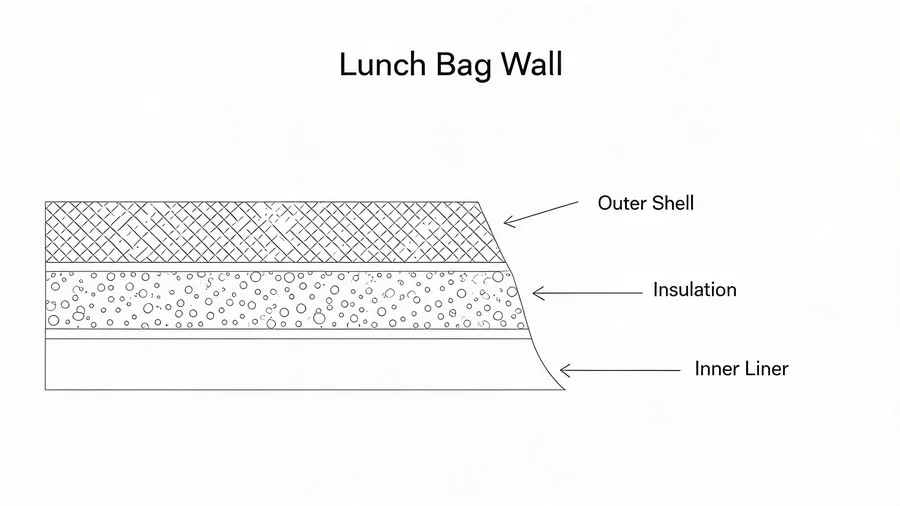
The liner is the second decision. An aluminum PET liner reflects radiant heat and cuts it by roughly half. PEVA and EVA film liners are cleanable and wipe down well, but they do not reflect. If the bag will hold hot and cold items, the foil liner usually wins. If the bag needs to be wiped out daily, a film liner is easier to live with.
Shell choice changes hand feel and abrasion more than it changes thermal performance. A 210T polyester shell is light and packs flat. A 600D polyester shell is heavier, more abrasion resistant and holds a shape. A 600D nylon shell adds strength at a lower weight. Canvas gives a structured, textile feel that suits retail gifting.
Seams, zippers and coatings are separate decisions. Heat-welded seams, waterproof zippers and a PU or PVC coating each add cost and each solve a different problem. A coated shell with stitched seams still leaks at the needle holes. Buyers who need real water resistance should specify the seam method, not just the coating.
| Spec layer | Common options | What it changes | What the buyer gives up |
|---|---|---|---|
| Foam | Closed-cell PE, XPE, EVA at 8 to 15 mm | Thermal hold and structure | Thinner foam packs flatter but insulates less |
| Liner | Aluminum PET, PEVA film, EVA film | Radiant heat reflection and cleanability | Foil reflects but can crease; film wipes clean but does not reflect |
| Shell | 210T polyester, 600D polyester, 600D nylon, canvas | Hand feel, abrasion, print surface | Lighter shells print well but wear faster |
| Seams | Stitched, heat-welded | Water resistance at the join | Welded seams limit construction options |
| Zipper | Standard, waterproof | Leak path and opening feel | Waterproof zippers are stiffer to pull |
None of these layers work alone. A 15 mm foam with a stitched uncoated shell and a film liner will underperform a 10 mm foam with a foil liner and a coated shell in a real lunch bag. The spec sheet has to describe the whole build.
Logo Methods and Their Minimums
Decoration is where low-MOQ programs get blocked. The realistic menu is screen printing, heat-transfer graphic, embroidery, woven label, metal plate, laser mark and heat-pressed PVC patch. Each carries its own minimum.
A woven label runs at a lower minimum than a heat-pressed PVC patch. A metal plate sits between them. A laser mark can run lower still on the right substrate. That means a 500-piece bag order is fine for a woven label and tight for a PVC patch. The bag minimum is not the program minimum.
Artwork readiness
Vector artwork, a Pantone reference and an agreed color standard should exist before bulk. A raster logo will not separate cleanly for screen printing. A Pantone number without a physical standard will drift between the screen and the fabric.
Approval samples come next. A strike-off approves printed artwork, color, scale and registration. A lab dip approves dyed material color before bulk. Both are approved before the run, never after. Buyers who skip this step end up arguing about color at the port.
If the program includes totes alongside lunch coolers, the same decoration logic applies to insulated tote bags bulk orders. The methods and the approval steps do not change.
Packaging, Cartons and Freight Planning
Packaging is a freight decision disguised as a presentation decision. Six routes are realistic: poly bag, color box, gift box with handle bag, branded poly mailer, hang tag with poly bag, and dust bag.
Each one changes carton cube. A color box adds board thickness and air. A gift box with a handle bag adds more. Poly bags compress and ship dense. The bag itself rarely drives the freight bill. The packaging does.
Retail-ready presentation suits gifting programs where the bag is handed to an end user. Bulk-carton presentation suits meal services and distributors who repack. Ask for a packaging spec sheet and carton dimensions before quoting freight. Without those numbers, any freight estimate is a guess.
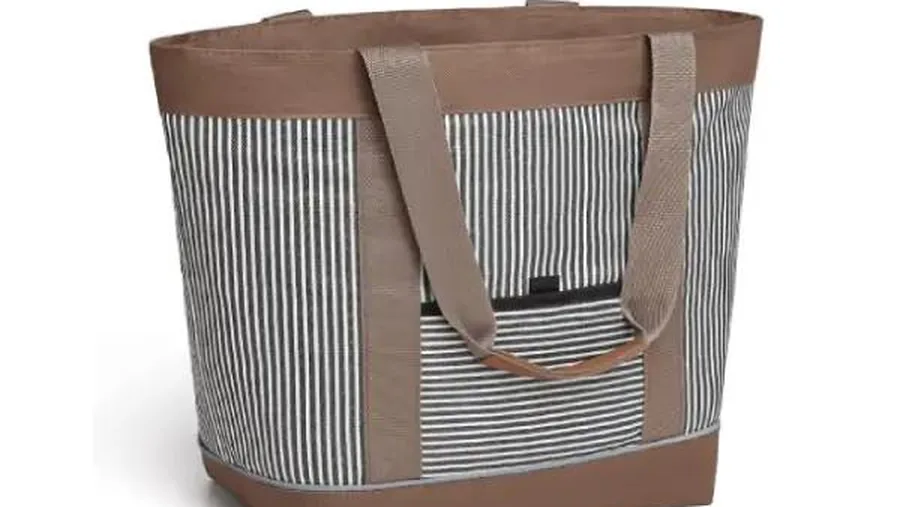
Custom cooler tote bags for a corporate gifting run often ship in branded poly mailers to cut cube while keeping the unboxing clean. That is a packaging choice, not a product choice, and it is reversible.
The OEM Timeline, Step by Step
Eight steps run from first contact to loaded container: inquiry, quotation and contract, sampling, material purchase, mass production, inspection, packing and shipping.
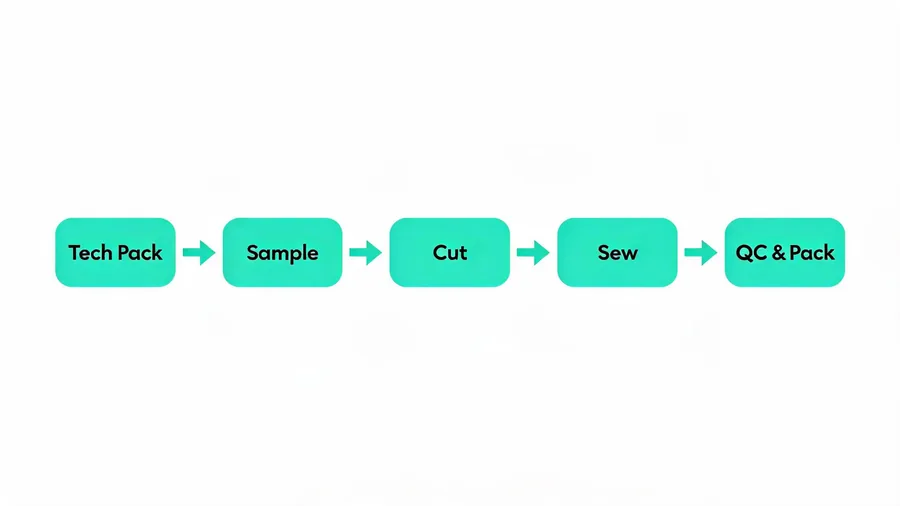
Sampling is paid. Revisions move the clock. A pre-production sample made with intended bulk materials is the gate before mass production starts. Nothing should run until that sample is signed.
Sample types, in order
- Proto sample: early shape and construction check.
- Fit sample: wear, access and strap geometry check.
- Pre-production sample: bulk materials and approved methods.
- Golden sample: the approved reference held against production.
Rush options exist. They change cost and they compress the schedule. They are not a substitute for an approved sample, and buyers who try to skip sampling usually pay for it in rework. The full sequence is described on the OEM process page.
Quality Control Documents a Buyer Should Ask For
The buyer's control set is five documents: a tech pack, a bill of materials, a specification sheet, a color standard and a workmanship standard. Together they define what was ordered and what will be accepted.
Inspection uses AQL sampling with critical, major and minor defect classification. Those definitions should be agreed before inspection, not negotiated after a failed lot. Tolerances and critical dimensions belong on the spec sheet. They should not be argued at the port.
Change control matters just as much. Any revision to material, pattern, artwork or packaging needs written approval. A verbal change on a phone call is not a change order. It is a future dispute.
A Bulk Buyer Checklist Before You Commit
- Confirm the insulation build, liner type, shell denier and finished dimensions in writing.
- Confirm the decoration method, artwork format, color standard and approval sample.
- Confirm packaging, carton dimensions, labeling and shipping terms.
- Confirm the inspection plan, defect definitions and the response window for claims.
- Confirm the MOQ per material, per color and per component, not just per bag.
Work through that list with any supplier before a deposit moves. The answers tell you more about the factory than a catalog does.
For a broader view of the category, the wholesale lunch bags guide covers adjacent formats and use cases. Buyers building a mixed program often pair lunch coolers with bulk insulated bags from the same spec family to keep materials and colors consistent.
Send a spec, a target quantity and a delivery window through the linked contact page and a quote can be built against it.
FAQ
What is the difference between a cooler bag and an insulated lunch bag?
Size and use case, mostly. A cooler bag is built for a family outing or a day trip and usually carries a larger volume, a wider opening and sometimes a shoulder strap. An insulated lunch bag is smaller, built for one meal, and often fits inside a work bag or backpack. Both use the same basic build: a closed-cell foam layer between a shell and a liner. The difference is dimensions, handle geometry and how the bag is packed.
What should a bulk buyer check to keep food cold in an insulated lunch bag?
Check the whole build, not one number. Confirm the foam type and thickness, the liner film, whether the shell is coated, and how the seams are closed. A foil liner reflects radiant heat; a film liner wipes clean but does not reflect. A stitched uncoated shell leaks at the needle holes even if the fabric is coated. Ask for the spec sheet to describe foam, liner, shell, seam and zipper together, because that combination sets real performance.
How do you choose the right insulated lunch bag for a retail or gifting program?
Start from the end user, then work backward to the spec. A gifting program usually needs retail-ready packaging, a clean logo and a shape that photographs well. A meal service needs wipe-clean liners, dense carton packing and a simple decoration. A retail program needs a shell that survives handling and a color standard that holds across reorders. Once the use case is clear, the foam, liner, shell and decoration choices narrow quickly.
What does bulk ordering change about insulated lunch bag specs and minimums?
Bulk changes the minimums more than the physics. MOQ is set per material, per color and per component, so adding a second lining color or switching shell fabric can reset the minimum even when the finished bag count stays the same. Decoration methods carry their own minimums as well, and a woven label, a metal plate and a heat-pressed PVC patch do not share the same threshold. Spec discipline, not order size alone, is what lowers per-unit cost.