Custom Insulated Delivery Bags: OEM Spec and Branding
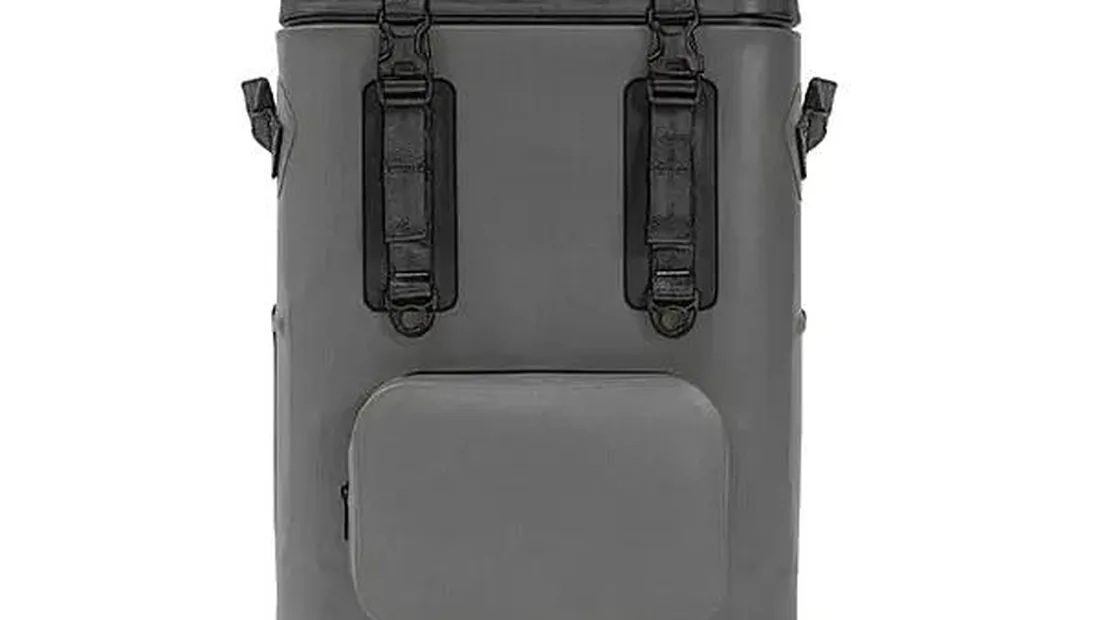
A custom insulated delivery bag is not a stock tote with a logo slapped on the front. It's a bag built to your dimensions, your foam thickness, your liner, your closure and your color standard. The difference shows up on the road, in the hot-hold, and in the returns column. If you run deliveries, distribute foodservice packaging, or ship meal kits, this guide walks the variables a factory actually needs from you.
Terminology gets loose here. Sellers use "thermal" and "insulated" interchangeably, and sometimes "cooler" for a bag with no meaningful insulation layer at all. The insulation layer is the part that matters: closed-cell PE, XPE or EVA foam bonded into the panel, plus a reflective liner on the food side. Everything else (fabric, zipper, handle, logo) is packaging around that core.
What Counts as a Custom Insulated Delivery Bag
Say a regional pizza operator wants 1,200 bags in two sizes. A stock catalog bag won't do it. The 16-inch pies need a different footprint than the 12-inch. The handles need to survive being hung on a scooter hook, and the brand color has to hold across both sizes. That is a custom build, and it starts from a spec, not a catalog page.
The line between stock and custom is not the logo. Plenty of suppliers will heat-press your artwork onto whatever they already import. The line is whether the bag's dimensions, foam, liner and closure are set by your requirements or by someone else's inventory.
Who buys this way? Delivery operators running their own fleet. Distributors who resell under their own label. Grocery and meal-kit brands where the bag is part of the customer experience. Catering companies that need a bag matching a specific tray. Each one has a different constraint, and each constraint lands somewhere in the spec.
What You Can Customize: Size, Foam, Liner, Fabric, Zippers and Logo
Almost everything, within reason. The variables that move cost and lead time most are foam thickness, liner material, seam construction and logo method.
Dimensions and tolerances
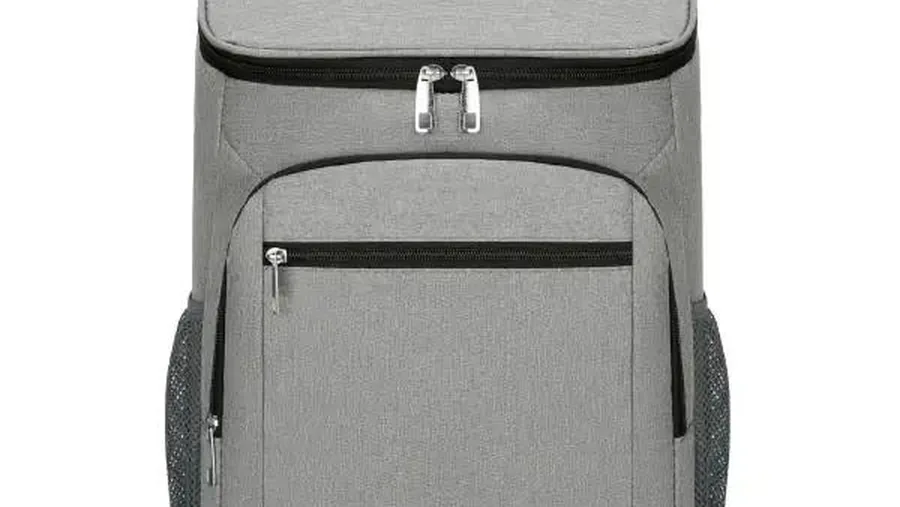
Height, width, depth and opening length are all measured on the finished bag, using defined reference points and a stated product condition. A dimension diagram with measurement points beats a paragraph of description every time. Tolerances matter too. Without a stated tolerance, a bag that measures a few millimeters off is an argument. With one, it's either in spec or it's not.
Insulation build
Closed-cell PE, XPE or EVA foam at 8 to 15 mm is the standard range for delivery bags, with the thickness chosen against your hold requirement. The aluminum PET liner on the food side cuts radiant heat transfer, and the combination is what extends cold retention. Published construction data for this build puts the foam at roughly R-2.5 to R-4 per inch. The reflective liner cuts radiant heat by about half and extends cold retention by 10 to 20 percent. Those are construction figures, not a test result for any specific bag. Your actual performance depends on the tested specification.
Fabric and coating
Nylon runs from light base weights up through 420D and 600D. Polyester covers 190T, 210T and 300T through 600D and 1200D. Canvas sits at 8, 10, 12 or 15 oz. Recycled rPET is available where a sustainability story matters to your buyer. On the waterproof side, PU or PVC coating at 3000 mm+ handles rain and spills, while TPU lamination at 10,000 mm+ is the choice for serious weather exposure.
Closure and hardware
Zipper type, roll-top closures, heat-welded seams and waterproof zippers all change how the bag performs in the wet. Heat-welded seams are the upgrade that stops water wicking through stitch holes. Ask any supplier which seam type they use, and why.
Logo methods
| Method | Best for | What to watch |
|---|---|---|
| Woven label | Durable brand mark on fabric panels | Design detail limited by yarn interlacing |
| Metal plate | Premium look, hard-wearing | Adds weight; attachment must be tested |
| Heat-press PVC | Bold graphics, multi-color | Adhesion and wash performance need validation |
| Laser | Subtle tonal marks on coated fabric | Contrast depends on substrate |
| Reflective | Night visibility for riders | Reflective grade affects cost and minimum |
| Screen print | Solid colors, repeat runs | Ink system must match the fiber |
Each method carries its own minimum, and that minimum is per method, not per bag. A laser mark and a reflective transfer don't share a floor.
How the OEM Eight-Step Process Runs, From Inquiry to Shipment
The sequence is fixed. Skipping a step costs more than it saves.
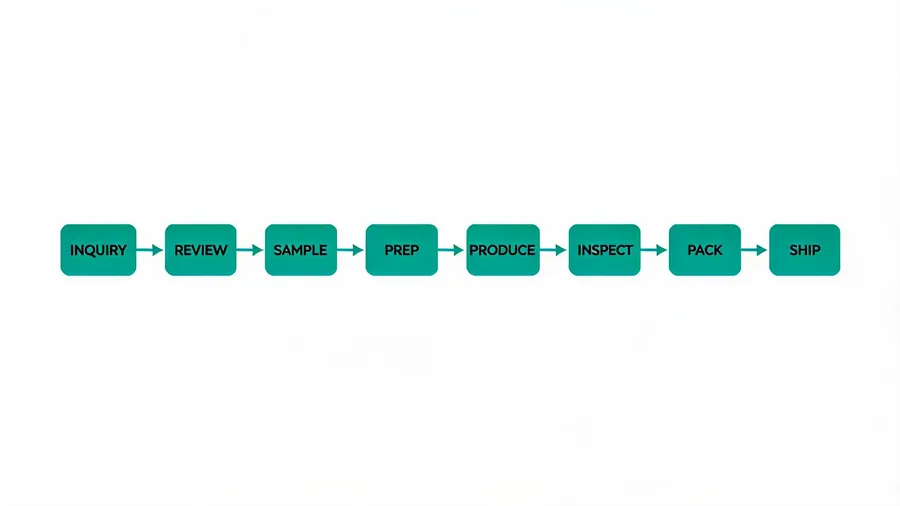
- Inquiry confirmation (typically 1 to 3 days)
- Quotation and contract (1 to 2 days)
- Sampling (5 to 7 days)
- Material purchasing (3 to 5 days)
- Bulk production (15 to 20 days)
- Quality inspection (2 to 3 days)
- Packing (2 to 3 days)
- Shipping
Your approvals sit between steps, and they gate the next one. No signed sample, no material purchase. No approved lab dip, no bulk fabric cutting. This is not bureaucracy; it's the mechanism that stops a wrong color from becoming 1,200 wrong bags.
Once a spec is signed off, change control takes over. Revisions to materials, patterns, construction, artwork, tests or packaging go through a documented approval rather than a phone call. Verbal changes are how disputes are born.
Sampling: Proto, Fit, Pre-Production and Golden Sample
Sampling is where the bag gets decided. Four sample types matter, and each answers a different question.
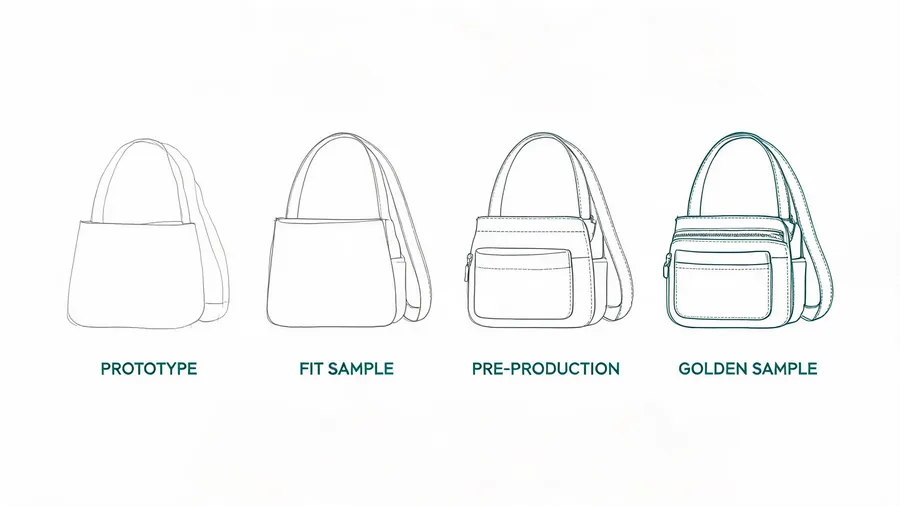
- Proto sample: concept, shape, construction and initial dimensions.
- Fit sample: wear, access, strap geometry and ergonomics against the real user.
- Pre-production sample: built with intended bulk materials and approved methods.
- Golden sample: the approved physical reference held against production workmanship and appearance.
Color approval runs alongside. A lab dip approves dyed material before bulk; a strike-off approves printed artwork for color, scale, registration and print quality. Pantone matching to ΔE≤2.0 is the working target for a color standard.
Samples are paid, and they take time. Budget 1 to 10 days for sampling, and 2 to 3 days for one revision round. Anyone promising free samples is either eating the cost somewhere else or not making a real sample.
For a deeper look at how sampling and bulk sourcing fit together, see bulk insulated bag sourcing.
Minimums, Lead Time and What Moves Them
MOQ is set per material, per component, per color and per finished product. It's not one number for the whole order. This trips up buyers constantly. They hear a number, plan around it, then discover the reflective logo needs a different floor than the laser mark, and the special fabric needs another.
What moves the minimum? Logo method. Fabric choice. Color count. A special fabric or a custom color carries a different floor than a stock material, because the mill has its own minimum before the bag factory even starts. The practical answer is to ask for the minimum per line item, not per order.
Lead time follows the same logic. Sampling runs on its own clock. Bulk production runs on another, and complex structures or very large runs push it out. Rush options exist at a cost, but they compress the schedule, not the process.
If you're sourcing insulated grocery or meal-kit bags specifically, the minimums and lead times are covered in more detail in the bulk insulated grocery bags guide.
Writing a Spec Sheet a Factory Can Quote From
This is the section most buyers skip, and it's the one that saves the most money. A tech pack is the controlled specification: dimensions, materials, construction details, artwork, labels, packaging and test requirements. Here is what belongs in it.
- Product name, intended use, target user, size, capacity and maximum recommended load
- Dimension diagram with measurement points, nominal values and tolerances
- Material composition, construction, weight, thickness, coating, finish and approved color
- Complete bill of materials with hardware sizes, finishes and color references
- Panel map, pattern revision, seam types, seam allowances, stitch density and reinforcement
- Pocket, divider, liner, insulation, frame, foam and closure construction
- Artwork dimensions, placement coordinates, process, colors and durability requirements
- Label content, placement, care instructions and traceability codes
- Performance test methods, conditioning, sample size, acceptance limits and report format
- Packing method, shape-control inserts, polybag requirements, carton quantity, carton marks and shipping tests
A complete bill of materials does two jobs at once. It speeds up costing, and it stops mid-project substitutions, because every component is named and referenced before production starts.
The dimension diagram is the single highest-value page in the pack. It removes the ambiguity that causes most first-article rejections.
Comparing Quotes Without Comparing Apples to Oranges
Two unit prices rarely describe the same bag. One quote may use 8 mm foam and the other 15 mm. One may use a PU coating and the other TPU. One may use standard seams and the other heat-welded. One may include a printed polybag and the other a plain one. The number on the page tells you almost nothing until you've normalized the inputs.
The questions that expose the difference:
- What foam, at what thickness?
- What liner material, and is it reflective?
- What seam construction?
- What zipper grade?
- What packing, and what carton quantity?
- What inspection standard, and what defect classification?
Build a like-for-like checklist and force every quote through it. The cheapest quote is often the thinnest bag, and the thinnest bag is the one that comes back. A supplier who can't answer these questions in writing is telling you something.
For a full walkthrough of the delivery-bag category, including how bags perform across different food types, see the food delivery insulated bags guide.
If you have a spec ready, or even a rough one, send it through the linked contact page and ask for a quote against it. The more detail you provide, the more useful the response.
FAQ
What is the difference between thermal bags and insulated bags?
In practice, the terms are used interchangeably, but the construction matters more than the label. A genuinely insulated bag has a closed-cell foam layer bonded into the panel, usually with a reflective liner on the food side. A bag sold as "thermal" may have only a thin foil layer with no foam, which holds temperature for minutes rather than hours. Ask any supplier what foam thickness and what liner they use, and treat the answer as the real definition.
Where can I find custom delivery bags?
Custom delivery bags come from OEM factories, not from promotional catalogs. The catalogs sell stock bags with a printed logo. A factory builds to your dimensions, foam, liner, closure and color standard. Start by writing a spec sheet with dimensions and tolerances, then send it to suppliers who can show you a comparable build. If a supplier can't quote from a spec, they're reselling, not manufacturing.
How much does it cost to make a custom bag?
Unit cost depends on foam thickness, liner material, fabric weight, seam construction, logo method, packaging and order quantity, so no honest figure exists without a spec. Two quotes that look different are usually describing different bags. The way to compare is a like-for-like checklist: same foam, same liner, same seams, same zipper, same packing. Normalize the inputs first, then compare prices.
Can I get a sample before placing a bulk order?
Yes, and you should. Sampling runs through proto, fit, pre-production and golden sample stages, each answering a different question. Samples are paid and typically take 1 to 10 days, with one revision round adding 2 to 3 days. The golden sample becomes the reference held against bulk production, so it's worth getting right before material purchasing begins.