Lunch Bag Size Guide: Dimensions and Container Fit
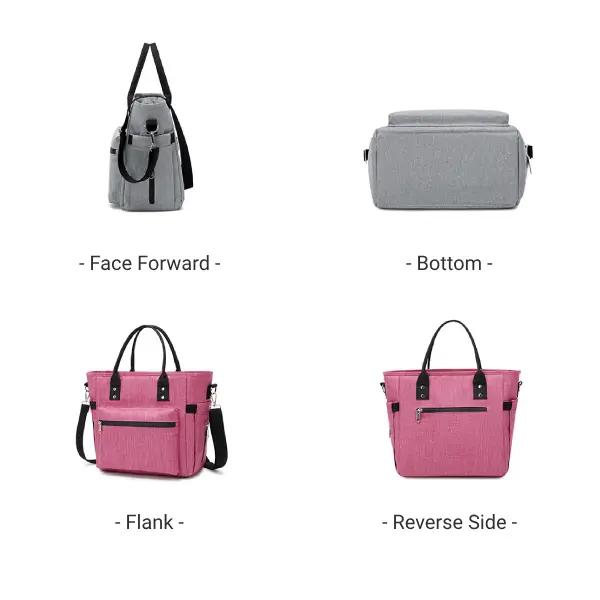
Lunch bag size is not one number. It is a set of finished dimensions, a stated capacity, and a measurement method that tells your supplier where to put the tape. Get those three things straight and quotes become comparable. Skip them and you will be comparing a 4-liter bag against a 4-liter bag that holds two sandwiches.
Say a buyer sends three factories the same line: "lunch cooler, medium." Three samples come back. None of them fit the same food container. That is not a supplier problem. It is a specification problem, and it is the one this guide exists to prevent.
What lunch bag size actually measures: height, width, depth and capacity
Height is the vertical finished dimension, taken between the reference points you name and in the condition you name. A bag lying flat measures differently from a bag standing loaded. Pick one and write it down.
Width is the horizontal finished dimension across a stated panel or across the opening. Those two are not the same measurement on a bag with a curved top. Depth runs front to back, and on most lunch coolers the gusset or side panel controls it.
Capacity is internal volume, expressed in liters or another stated unit, measured by a defined method. It is not the outer box size. A soft bag's outer dimensions describe a shape that the fabric does not fill.
Here is the part buyers underestimate. Outer dimensions and usable internal space are never the same number. Foam, liner, seam allowance, binding tape and a zipper tape all eat inward from the shell. On a small lunch cooler, those layers are a large fraction of the total.
Nominal size versus measured size
Every dimension on a spec sheet is nominal until a sample is measured. Assembly changes things. Foam recovers at different rates after cutting. Sewing pulls panels in. A bag that sewed to nominal at the pattern stage can measure short after the gusset is attached and turned.
That is why the dimension diagram needs tolerances attached to it. Without a tolerance, a measured bag is neither right nor wrong, and a QC inspector has nothing to reject against. The tolerance values themselves belong in your approved specification, set with the factory, not copied from someone else's sheet.
Lunch cooler sizes by use case: single meal, dual compartment and family
Forget standard sizes for a moment. Sizes follow the load, and the load follows the user.
A compact single-meal lunch cooler is a small insulated bag for meals, snacks and beverages. It is sized around one container plus a drink, and it usually carries by handle or a short shoulder strap. Buyers in this segment care about whether a specific bento box fits flat, not about liters.
Dual-compartment and larger carriers are built for several meals or shared use. Two compartments let hot and cold, or dry and wet, stay apart. A family carrier is bigger again, and it behaves more like a small grocery cooler than a personal lunch bag.
There is a thermal argument for matching size to load, too. A fuller load and a smaller air volume reduce rapid internal temperature fluctuation. A big bag with one sandwich inside is mostly air, and air moves heat around. Oversizing a cooler for the payload is a common own goal.
Keep every size statement as a range or a use case. If a factory quotes you a fixed number as "the standard," ask what method produced it.
How insulation thickness changes the size you can actually use
Insulation reduces conductive and convective heat transfer. It does that by occupying wall space. Thicker walls, same outer shell, less room inside. There is no way around the geometry.
A reflective barrier is a metallized film or foil-faced layer that reduces radiant heat transfer when it is correctly positioned in the stack. Position matters more than thickness here. A barrier in the wrong layer does little.
Thermal bridges form where insulation is compressed, interrupted or replaced by conductive hardware. Zippers, piping, handle anchors and label plates are all candidates. A bridge is a path, and heat takes the path.
So the trade-off is real: for a given internal volume, a thicker insulation stack forces a bigger outer bag. That bigger bag costs more fabric, more foam, more carton space. Say a buyer wants a 4-liter interior and a heavy wall. The outer shell grows, and the shipping carton grows with it.
| What you specify | Effect on internal usable volume | Effect on outer size and freight |
|---|---|---|
| Thicker foam or insulation stack | Reduces it, for the same shell | Grows the outer bag; fewer units per carton |
| Deeper gusset or side panel | Increases depth and volume | Grows the footprint; changes carton orientation |
| Added reflective barrier layer | Slightly reduces it | Small increase in wall build |
| Rigid shape-control insert | Protects volume, limits squashing | Adds packed height; affects carton count |
| Internal dividers or pockets | Reduces usable open volume | Neutral, but adds labor and pattern complexity |
| Waterproof zipper and welded seam | Marginal reduction at the opening | Neutral to slight increase in wall build |
None of those rows carries a number, and that is deliberate. The values depend on the construction you approve. What matters is that you can see the direction of each decision before you approve it.
The spec sheet a buyer should send before asking for a lunch bag quote
Imagine sending one page that lets five factories quote the same thing. That page exists, and it is short.
- Product name, intended use, target user, size, capacity and maximum recommended load.
- A dimension diagram with measurement points, nominal values and tolerances.
- Material composition, construction, weight, thickness, coating, finish and approved color.
- A complete bill of materials with hardware sizes, finishes and color references.
- Panel map, pattern revision, seam types, seam allowance, stitch density and reinforcement details.
- Pocket, divider, liner, insulation, frame, foam and closure construction.
- Artwork dimensions, placement coordinates, process, colors and durability requirements.
- Label content, placement, care instructions and traceability code requirements.
- Performance test methods, conditioning, sample size, acceptance limits and report format.
- Packing method, shape-control inserts, polybag requirements, carton quantity, carton marks and shipping tests.
Two of those lines do most of the work. The dimension diagram kills the "medium" problem. The bill of materials kills the argument about which foam went into the sample.
On materials, shell options are yours to choose from a range rather than a single answer. Nylon is commonly specified by weight and denier, polyester by denier and construction, canvas by ounce weight, and recycled PET is available as an option. Exact figures belong in the approved specification. If you are still shaping the brief, the wholesale lunch bags guide walks through the material and closure choices in more depth.
Sizing for cold chain: hold time, payload and temperature claims
Hold time is the period during which contents stay within a defined temperature range, under stated test conditions. It is not a property of the bag alone. Change the ambient, the starting temperature, the load or the refrigerant, and the number moves.
Payload means the temperature-sensitive contents inside the bag. It excludes the bag itself and any supporting packaging, unless your specification says otherwise. Get this definition wrong and two labs will report two different results for the same bag.
Any temperature claim has to name the test method, the ambient condition, the starting temperature, the load, the refrigerant quantity and the acceptance limit. A claim without those six is marketing, not data. Ask any supplier for the full test report, not the headline.
And keep perspective on where heat actually gets in. Opening frequency and zipper gaps can dominate real-use temperature loss even when wall insulation is good. A delivery rider who opens the bag at every stop is testing the closure, not the foam. If your product will be opened constantly, look at food delivery insulated bags for how closure design changes under that duty cycle.
Where a regulation applies to the finished product, name it and check it. In the US, children's products fall under CPSC rules including CPSIA. In the EU, REACH and GPSR set chemical and general product safety obligations. Those are legal frameworks your compliance team confirms against current guidance. They are not certifications a bag factory issues.
From bag size to carton size: packing and freight implications
Carton quantity and carton marks are part of the specification, not an afterthought. They decide how many units ship, how the pallet stacks, and whether the bag arrives creased.
Shape-control inserts and polybag requirements change how many units fit per carton. A soft cooler bag squashed into a tight carton saves cube and loses shape. A bag held open by an insert costs cube and arrives looking like the sample. That is a commercial decision, and it belongs on the spec sheet next to the dimensions.
Shipping tests belong in the packing specification too. Drop, compression and vibration performance are agreed against a method and an acceptance limit, and the exact values come from your approved specification rather than from a rule of thumb.
Why does this matter to a sourcing manager first? Because the carton is where bag size turns into freight cost. A few millimeters of extra wall, multiplied across a carton, changes the number of units per carton, and that changes everything downstream. No freight rates here, and no container counts. Just the mechanism, which is enough to make you ask the right question.
If your program also carries larger insulated formats, the same packing logic applies at a bigger scale, and the insulated tote bag guide covers how size and structure interact on those.
Common lunch bag sizing mistakes and how to avoid them
Buyers compare outer dimensions across suppliers and assume the internal volume matches. It rarely does. Two bags can share a footprint and differ by a third in usable space once the wall build is counted.
Buyers specify capacity without stating the measurement method or the conditioning state. A bag measured empty and flat is not the same bag measured filled and closed. Name the method.
Buyers forget that foam and insulation thickness must be measured under a specified pressure and conditioning state. Foam compresses. Measure it at the wrong pressure and you will argue about a number that was never comparable.
Buyers approve artwork and labels before the panel map and pattern revision are locked. Then the panel moves two millimeters and the label no longer centers. Lock the pattern first, then approve print.
One more, and it is the quiet one: buyers treat the sample as the specification. A sample is evidence. The specification is the contract. If the two disagree, the specification wins, so write it properly. When the brief is ready, send the spec through the contact page and a quote can be built against your numbers instead of ours.
FAQ
What is the typical size of a paper lunch bag?
Paper lunch bags are a different product category from insulated coolers, and there is no single typical size across the market. Sizes vary by manufacturer and by intended load, from small single-sandwich bags to larger multi-item carriers. If you are sourcing a paper format, treat size the same way you would treat a cooler: define height, width and depth with a dimension diagram, state the reference points, and attach tolerances. Ask any supplier for their measurement method before comparing quotes, because outer dimensions alone tell you nothing about usable space.
What is the standard size of a lunch box?
There is no industry-wide standard lunch box size. Retail listings show a wide spread, and the dimensions in those spec tables usually describe the outer case rather than usable internal volume. For sourcing purposes, the useful approach is to size from the container you expect the user to carry. Measure the actual food container, add clearance for the liner and insulation stack, and specify the result as nominal dimensions with tolerances on a drawing. That gives every supplier the same target.
What size should a lunch box be?
Size it from the payload, not from a catalog. A single-meal carrier is built around one container plus a drink. A dual-compartment or family carrier is built for several meals or shared use. Bear in mind that a fuller load and a smaller air volume reduce rapid internal temperature fluctuation, so oversizing a cooler for a light load works against thermal performance. State capacity with the measurement method and conditioning state, or the number is not comparable between suppliers.
How do I compare two suppliers quoting the same lunch bag size?
Send both the same specification: dimension diagram with measurement points, nominal values and tolerances, plus material composition, construction, foam thickness measured under a stated pressure and conditioning state, and the packing method. Ask each to quote against that document and to return a measured sample report. If a supplier cannot state how they measure capacity, the capacity figure is not usable. Any temperature claim should come with the test method, ambient condition, starting temperature, load, refrigerant quantity and acceptance limit.